Tuesday, October 20, 2009

moon

This little big movie has tiptoed into theatres as quietly as a moon landing hoax set in the Nevada desert. Chris had suggested we go see it, but apart from that I hadn’t even heard a word of it until two different friends trotted off to see it on the same day. As Chris unenthusiastically went with me to see Whip It a few weeks ago, I agreed to go with him to see Moon, directed and written by Duncan Jones. Jones is the son of David Bowie, a piece of information that I am somewhat reluctant to share because it has no real bearing on the film but I cannot deny my enthusiasm for a bit of non-salacious industry gossip.

Three years into his solitary posting on the moon as a mining company employee, Sam Bell is just a couple of weeks away from returning to Earth, and to his beloved wife Tess and young daughter Eve. His enthusiasm for this return is tempered only by the frustration he feels over the slow passing of time—and by the things he is beginning to see.

From the flash of a woman on the chair in the rec room to a figure he sees outside on the surface of the moon, he cannot believe what he sees, until a disastrous accident during the investigation of a malfunctioning harvester renders him unconscious—and then changes everything.

It’s hard to really explain much further without ruining the surprise, which actually occurs fairly early in the movie. The cast list is quite small, with, amongst not many others, Sam Rockwell as Sam Bell and Kevin Spacey voicing Sam's non-HAL robot companion, Gerty. Gerty is a chunky and cumbersome contraption who converses much like a human (or one of those finicky humans who likes to correct you, at least) and supplants this with a screen that shows his reactions through a series of emoticons. This may seem gimmicky but when, late into the movie, Gerty says something moving and his emoticon is a sad face with a tear, you actually feel quite emotionally connected to him. Gerty is full of surprises throughout the movie and I ended up coming home quite disappointed to find that the closest thing I had to a robot companion was a cat that had pooped in the bathtub and a pint-sized Wall-E that waves his arms around and says, “EE-VAH!”

Moon is a study in what we would become after three years alone in space, and what lengths the forces that sent you there would go to keeping you safe and happy and, most importantly, a functioning member of staff. It is also, in a way, the moving tale of a man and his enormous grey calculator. As Sam becomes more confused and frustrated with what is happening and it begins to dawn on him what is going to occur, it is a devastating moment for the audience when he drives out of the lunar base in his big grey Hummer and finds himself looking up at the full Earth. He starts to cry and wails, “I just want to go home!” and I swear if it was possible you’d jump through that screen to hold him if only you’d brought your spacesuit and didn’t have to worry about Total Recall head-explosions.


The exterior elements are not CG but are miniatures, little trucks rolling about on a little rocky set. To be honest, I’ve always preferred miniatures. CG has come a long way and on the whole looks fantastic, but I still think you can tell if something was really there, in front of the camera when it was recording. A set of three buildings and one truck on a grey landscape doesn’t take much but it looks perfectly spot-on, no doubt because so few of us have actually been there to say otherwise. The budget for this movie could have been tiny but it’s hard to tell, because Jones’ script is perfectly tuned and despite the limited characters and set options this movie is never boring and always compelling. Chris and I had an argument afterwards about whether humanity could reach the point where what happens in the movie could really occur—I say no, he says yes—so if you see it, I’d love to hear what you think. Do make the effort though; I think Moon is only showing in ye olde arthouse cinemas, but it deserves a general release, and I genuinely enjoyed it.

Monday, October 12, 2009

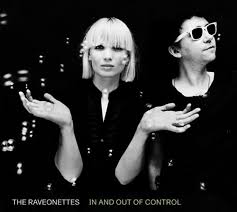
the raveonettes, in and out of control

At the last Raveonettes show at the HiFi Bar, I passed out. I can only assume, as I don’t drink or take drugs, that their frightening amount of cool overwhelmed me and I came over all faint. I’m still not sure. I regained consciousness after a few seconds and demanded of a worried Chris that we had to stay until they’d played one of my favourite tracks from previous album Lust Lust Lust—“Aly, Walk With Me”. This swoon-inducing band is made up of Sharin Foo and Sune Rose Wagner, who hail from Denmark but now live in the US. The two of them sing, play guitar, have a drum machine and enjoy a bit of feedback.

The Raveonettes, mostly, aren’t an overly complicated band. They sing about dancing and love and summer and heartbreak. They did a brilliant rendition of “My Boyfriend’s Back” on their 2005 album Pretty in Black. They are a rock band in the pure sense—they write great songs and you love them, want to dance to them and sing them really loud in a convertible Cadillac along Palm Beach. Track one from In and Out of Control, the impossibly cheery “Bang”, declares that “kids wanna bop/out in the street/fu-fu-fun/all summer long”. It’s a hard sentiment not to agree with. I’d like to have fun all summer long too, though it’s a shame it can’t extend to other seasons.

Personally, I find them to be the perfect band to listen to when you’re driving along at night. Somewhere between The Beach Boys, hipster rock and rockabilly, I feel a bit cooler just by listening to them. I’ll suggest their style is surfabilly, but keep in mind that I’m a bookseller who likes music and I don’t really know what I’m talking about. Not all their songs are sunny—or at least as sunny as the music itself sounds. A good example up until now would have been the essentially happy but initially sad tale “Love in a Trash Can”, another song from Pretty in Black and which I listened to on heavy repeat. Now, their harder tracks are best explained through track four of this new album. The first time I heard the song, in the car on the way home from work, me and Chris both started at the chorus and looked at each other, whispering, “What...what did she just say there?” The song, I learned after groping through my bag for the cover, is called “Boys Who Rape (Should All Be Destroyed)”. It’s a small song. “3 to 1 girl/how can you win/one horrid night/you hope that it’s a bad dream/they rip you to shreds/make you feel useless/you’ll never forget/those fuckers stay in your head.” The upbeat feel of the song really throws you for a loop, and to be honest it’s probably the catchiest song on the album, too. The chorus has an echo, which makes it even more compelling to sing with a friend, though you’ll undoubtedly feel a bit awkward doing so in a shopping centre when you remember what you’re actually singing.

There’s not a Raveonettes song out there that I don’t like. Their guitar licks are catchy and vibrant, Sharin Foo is cute as hell, and their tunes will probably make you want to dance with a tall, skinny guy with a quiff and Cuban heels. Don’t resist it. I certainly can’t.

Friday, October 9, 2009

stieg larsson, the girl who kicked the hornets' nest

I’ve been a bit lax on the reviewing front of late, but I have an excuse—Stieg Larsson. If I’m reading a 600-page Swedish novel I can’t be expected to even be thinking about anything else. This feeling was summed up nicely by a colleague today, who is in the midst of reading the same book: “I’m jealous that you’ve finished Hornets. It means you’ve got your life back!”

The Girl who Kicked the Hornets’ Nest is book three in the Millennium Trilogy. In the book world, it’s been a phenomenon, creeping up towards Twilight/Harry Potter/Da Vinci Code territory, but with a much more interesting back story. Author Stieg Larsson wrote the three books in the trilogy but died of a heart attack at age fifty, just before the books were published and adored both in his native Sweden and internationally. There are rumours that Larsson, an investigative journalist like his male protagonist Mikael Blomkvist, was actually killed off due to his profession. I’m not sure whether this is true—though he almost certainly received death threats—or if it is a marketing ploy. Either way, he died young, and it’s sad. Because the Millennium Trilogy is a downright excellent series, and Larsson himself comes across as a genuinely bang-up guy.

It’s hard to review the last book in a series without in some way spoiling the contents of the others. But once you’ve read the blurb, you know two things: one, the main characters live through the first books; and two, they’re pissed. Book one, The Girl with the Dragon Tattoo, felt in some ways like a locked-room Agatha Christie book: there was a crime on an island with no viable escape routes. Mikael Blomkvist is summoned, in the mysterious way that non-police detectives often are, to help solve this crime, now decades old. He’s happy to lie low after being jailed for libel after breaking an uncorroborated story, so he accepts the challenge. (Incidentally, Swedish prisons come across as luxury spa retreats.) Meanwhile, Lisbeth Salander, the most unlikely and therefore most fabulous heroine in the history of fiction, is just trying to survive in a world that conspires against her. Twenty-five years old, tattooed, pierced, skinny, and able to pass for a teenager, she hates everyone and with good reason. After having her mental state questioned all her life, she is given a guardian who uses his position to abuse her in a truly horrifying scene that literally made me break out into a sweat on the tram. Lisbeth is not the kind of person who lets such things go by unpunished, luckily, and her story, which becomes linked to Blomkvist’s, makes for fascinating reading. Book two, The Girl who Played with Fire, follows the two of them as they go their separate ways—Lisbeth to search out and avenge her childhood wrongs, and Blomkvist back to what he does best, exposing bad guys. The death of two of Blomkvist’s colleagues bring them together yet again as Salander is accused of all number of crimes, not least Looking Scary and Being Uncommunicative.

Knowing that the characters survive each book isn’t the same as knowing what condition they will be by the next one. Book three begins with Lisbeth in hospital, fiercely unwell and accused of some more crimes and barely metres from the man who is the reason for most of the crimes perpetrated against her. Blomkvist is out and about trying with all he has to get her vindicated and to expose the enormity of the situation that led to Lisbeth’s current state. This is not light reading, and while I’m generally a fast reader it’s because I skip through sentences and rush to the end of the page. The Girl who Kicked the Hornets’ Nest isn’t the kind of book you can do that in, so laden is it with Swedish politics from decades ago and countless new characters who are all equally important. While this may make it seem like hard work, it’s still an exciting thriller. One of Larsson’s best talents is to spend the first two-thirds of a book revealing the atrocities of humanity and then, in the
final third, letting all the bad guys get their comeuppance.

But these aren’t simple spy thrillers. The most important part of these books is said by a character in Hornets: “When it comes down to it, this story is not primarily about spies and secret government agencies; it’s about violence against women, and the men who enable it.” Lisbeth, along with her mother and many other females in the books—as well as in reality—are treated appallingly. If it takes a bestselling thriller to bring facts like these to light, so be it.

This may be the one flaw in the books—that some of the women suffer, others are brave and powerful, but I can’t recall any of them being a villain. Larsson isn’t denying the existence of t
hem as such; they’re just not here, for these occasions.

I know this is a painfully long review—worse still, it’s my third draft—but I’m putting the effort in because they’re books worth reading. They’re not always pleasant, and sometimes very complex, but they are undoubtedly rewarding. With Larsson’s death, the trilogy is all we have of him. The third book ties up nicely, apart from one very very small loose end, which he could perhaps have followed through with in another story. We won’t know.

Sweden is ahead of us in making movies of the series (with all the characters looking wrong, ugh) but there are rumours going around—just rumours—that the person grabbing at the American film rights is young Mr Quentin Tarantino himself, purveyor of girl-power movies (Death Proof, anyone?) I believe he’ll do it justice, but you may as well grab a copy now and read it for yourself before the movie comes out, no?

Tuesday, September 29, 2009

surrogates

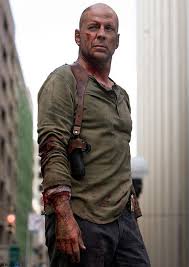
When I saw the previews for Surrogates, and knew there was going to be a part where everyone in a city falls dramatically to the ground at once, I was immediately sold. I love a good scene of destruction. (Anyone else excited over the entire world being destroyed in 2012? Anyone?) Plus, there was going to be Bruce Willis in full goatee rage. It was going to be awesome.

But it wasn’t. Honestly, I was very underwhelmed by Surrogates. In the near future, robotics have developed to a point where everyone can send robot versions—or “surrogates”—of themselves out into the world, where there is no way to get sick or injured, and you can look as pretty as you want to. Then someone’s surrogate is killed, and the robot’s owner is found in his home—dead. For reals. Who is doing this? How are they doing it? And why?

Well, the first question is answered, but the second is only given a vague, blink-and-you’ll-miss-it explanation. The why is the point, but I didn’t really care. I didn’t find any of the characters particularly deserving of my empathy, though Chris pointed out that by making everyone airbrushed, disconnected robots, it may have been purposeful. Still, an early death of a main character was a surprise but not heartbreaking, and Bruce Willis, while endearing enough just by being Bruce Willis, completely alienated me with his choice of surrogate haircut.


Willis plays policeman Tom Greer, put on the case of finding out what’s up with the supposedly impossible brain-implosions of humans. His only lead is a witness that he follows to the small outpost of humans who resent the surrogate lifestyle, instead living vicariously through themselves. They are an odd bunch; instead of being the heroes, they appear to be a group of violent, personality-free thugs who mostly wave around shotguns and shout “git offa my lawn!”. They are led by Ving Rhames, aka The Prophet, whose enormous dreadlocks would give you an initial happy-revolutionary feel. But he’s actually just a bastard. How did he rise to power? Who is he? Is he behind the attacks?

If there was any backstory for the characters in the movie, it could have helped. Bruce Willis and his doll-like wife Maggie, played unblinkingly by Bond Girl Rosamund Pike, have a minor tale to tell that is the same sad story heard in countless other movies about Policeman Suffering From Angst. Our Radha plays Peters, Greer’s partner, who fares much better follicly than Bruce. We know nothing about her, apart from that she lives in a house. The only other character we get to know a little about is indian-giver Canter, who created the surrogates, decided it was a bad idea after all, quit the company that made them and became a social pariah. Now he’s a recluse, and another link to the crime. He’s also, annoyingly, played by evil-since-Babe James Cromwell, aka I, Robot indian-giver Dr Alfred Lanning, who gave the world servant robots and then decided it was a bad idea and got himself thrown out of a window. That sense of déjà vu just served to remind me how much of a better movie I, Robot was, and that it is possible to make robots sympathetic characters and give sci-fi movies enough heart so you care what happens to the people within it. In Surrogates, Greer’s climactic decision comes across as selfish and unthinking more than heroic, because there simply isn’t enough emotion to work off.

There’s unanswered questions, too—where are the children? How was the one twist (which celebrated movie psychic Chris predicted, but for once chose not to share with me) hidden for so long? Does no one at all choose for their surrogates to be less-than-beautiful, or blue-haried, or plus-sized? It’s also ridiculously US-centric. During a news report at the beginning, it is noted that surrogates are now so affordable that 98% of the world can afford them. The world. More than 2% of which can’t currently afford to, you know, eat. How remote villages would have the electricity and general resources to build and recharge surrogates is beyond me, but hey, it’s fifteen years in the future—anything could happen. Do I sound cynical?

Look, it wasn’t the worst movie in existence—the scene I went to see it for was sufficiently dramatic, and there were a few interesting asides on what kind of surrogates people will pick, but it just wasn’t fleshed out enough for me. Chris gave it three out of five stars. I give it two—one for Bruce, who could just stroke his beard for an hour and half and I’d pay to watch it, half for effort, and half for being better than The Day the Earth Stood Still. The original comic, by Robert Venditti, is probably better.

Sunday, September 27, 2009

jason aaron, scalped

Another review from Chris, who is reading far more than me at the moment. [Insert bitterness about the amount of holidays teachers get here.]

“Graphic novel” is the term used for a story told in comic book form. Sometimes this is just a story arc from a superhero comic collected together, but most graphic novels out there have nothing to do with superheroes or fantasy.

Scalped, written by Jason Aaron and mostly illustrated by R.M. Guera, is as far away as the superhero comic as you can get, having the feel and pace of a crime television series rather than spandexy-planet-shaking-adventure pap. As the name hints, it is about Native Americans and violence. This is not a feel-good book, and it took a second reading for me to get past the bleakness and noir stylings to consider the story almost obscured beneath it.

A young Lakota named Dashiell Bad Horse ran away from his people’s reservation as a teenager, and worked hard making a life for himself that had nothing to do with his heritage. But after earning a rep as an FBI agent, he finds the part of himself he has been avoiding is the very thing others want to exploit. So the FBI, and in particular the embittered Agent Nitz, send him back home to work undercover for Red Crow, the ruthless tribal leader and crime boss of the reservation. Overall Scalped is most concerned with why people so often get trapped in places and perpetuate situations they should be doing everything they can to escape from.

This book is gritty. Nothing is romanticised. You’ll feel like washing your eyeballs and sending all your money to third world charities after reading it. But at the same time this book isn’t making a cheap attempt at using violence to be cool or adult in nature, as too many comics do. Scalped reads like a well considered portrayal of the problems indigenous people, and even disadvantaged people in general, deal with. While the peripheral characters will often commit immoral, violent and even psychotic acts without much reason or explanation, the motivation of the main characters (I won’t say ‘good and bad’ because the distinction disappears very quickly) are explored fully and with great sympathy. Even Red Crow, the heartless Godfather figure, becomes relatable, though never excusable.One of the most interesting characters to me was a young boy called Dino Poor Bear, who is about 15 or 16. The first time we meet him he asked Dashiell—by then working as one of the town’s only straight cops—if he can tag along or help out. Dashiell tells him to piss off. A few chapters later we are further introduced to Dino, and we meet his obese auntie and diabetic uncle. His pregnant sister is smoking crack in the backyard, and defends it to Dino by claiming its better than crystal meth because ‘crack comes from plants and shit’. As he leaves for work Dino’s grandmother, who provides the only other income to the house by tying tobacco twists, reminds Dino to hug his daughter before he leaves. He does so, promising the baby he’ll get her out of there once he gets his car running. And this is just his introduction, we watch Dino gain a footstep that might help him get out, but follow them up with choices that take him back two paces. The same is true of all the characters, but the writing and plot are such that we believe and sympathise with their mistakes, more than judge and condemn.

Tuesday, September 22, 2009

god of carnage

For Christmas this year we had the unexpectedly generous gift of a subscription to the Melbourne Theatre Company. They have a lower-priced version for the under 30 market, which we luckily are part of for an entire year more after this one. We’ve been to eight plays so far this year, which are convincing trying their best to tempt us into forking out the extortionist rates they make you pay once you hit your fourth decade. (I thought that, like car insurance, things got cheaper as you got older, not triple in price. No fair.)

In a French park, two boys have an argument. The result: one of them gets thwacked in the face with a stick and loses two of his teeth. The boys’ parents hold a meeting to discuss how to deal with the situation, imagining themselves as rational people who can deal with the silliness of children and work out a solution. They can’t, of course, because they’re human and humans as a species aren’t well known for their ability to fix problems with words. The whole event becomes a battleground between the couples and those within each relationship, and by the end even the painstakingly organised lounge room the conversation is held in bears the brunt of the event.

Hugo Weaving and his eyebrows starred as Alain, a lawyer whose most important announcements are usually interrupted by the ring of his mobile phone. As with other plays that star People What Are Famous For Being In Movies, the entire theatre went a bit silly every time he made a joke. I couldn’t really fault the cast—especially Alain’s wife Annette, played by Natasha Herbert, whose scene of inelegant illness was utterly convincing and wholly amusing in an immature kind of way. Pamela Rabe and Geoff Morrell round out the cast as Veronique, the injured child’s slightly batshit mother, and her more realistic husband Michel.

This play, translated from Yasmina Reza’s original, has the benefit of both being short—an hour and a half, no intermission—and the funniest play I’ve seen all year. Physical comedy and witticisms abound and I found myself quoting things like “pears!” in a posh (and awful) accent on the car trip home. It handled serious issues with occasionally too light a touch, and despite my enjoyment I could never entirely believe that the more flamboyant reactions the characters were having were realistic. However, until I am also an overprotective and French parent I can’t say for sure I wouldn’t also have a knock-down drag-out fight with my partner while guests were over. Perhaps it’s in the parenting manuals.

As with any art form that discusses classism, even only slightly, I heartily approve of this and advise you to go see it. Psst, there’s eight-dollar parking just down the other end of the road from the Arts Centre, in a warehouse. And grab some hot chips from Lord of the Fries, too, and eat them by the river. Otherwise, don’t bother going. Seriously.

Monday, September 21, 2009

(500) days of summer


This movie, which could also be known as (500) Shots of Zooey Deschanel’s Baby Blues, is a snapshot of the lives of twentysomethings Summer and Tom over five hundred of their days together. It’s a love story, but it’s not how you expect it to be—and not how ol’ romantic Tom nor cynical Summer expect either. Tom believes Summer is The One, but Summer tells him from the get-go that she is no believer in true love, only people having fun together. In the least shocking news of the year, Tom cannot resist Summer.

And who could? Zooey Deschanel is just about as cute as they come, and the camera loves her. Even when she’s not wearing makeup she is still adorable, and the costume designer has put her in glorious outfits and tied her hair up with cornflower blue ribbons. You’d hope, as a bitter cinema viewer drinking an unhealthy amount of flat movie Coke and rubbing your squishy belly in jealousy, that you could be pleased with a scene that sticks her drunk on a karaoke platform and watch her embarrass herself. Alas, no, and the She & Him singer does nothing but endear herself further to everyone in the film and cinema. Sigh. Over the course of their five hundred days, as we skip back and forth in time, she is not always perfect—but then who of us isn't at least once over a year and a half? Apart from me, obviously.

Joseph Gordon-Levitt as Tom sufficiently walks the line between respectable and scruffy, and you really feel for him when Summer gives out what would usually be a fairly clear signal of affection while telling him not to get attached. He does suffer from always coming across like a jerk in the few interactions with his two best pals and his infinitely wiser twelve-year-old sister, whom he consults with when things between he and Summer start to go awry. However, Tom also has one of the best scenes in the movie, as he happily heads to work the morning after his first date with Summer and the world responds to his mood with cheerful dancing in the park and an unexpected but hilarious Star Wars aside. Still, I had a real, physical problem in believing Gordon-Levitt as a grown-up with a job, and not as a teenager a la 10 Things I Hate About You/3rd Rock From The Sun. Part of me wanted to get in the screen and tell Zooey off for romping with someone I could not personally detach from his youth. I would follow that lecture with a kick in the shins for The Happening.


The song-and-dance isn’t the only little strange bit of non-reality in the movie, with occasional little breaks of style and pace into animation or documentary-style filming, and infrequent narration in the manner of Morgan Freeman observing all this from his Shawshank cell. The soundtrack is a highlight, and something we’ve already sold a handful of at work. Altogether, it makes for a nice little movie that is not quite romance or drama or comedy, but has some of each element within. As the kind of person who is utterly convinced by love, I was always on Tom’s side, but I never truly hated Summer, even when she does something quite hurtful at the end of the movie. And I left this movie on a sunny Monday afternoon feeling fairly generous towards the world-if not the Hoyts cinema that chose to show this film on the ludicrously expensive Xtreme Screen instead of showing something actually Xtreme like G-Force or District 9. Honestly.