Showing posts with label young adult. Show all posts

Monday, December 13, 2010

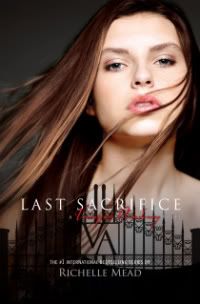
richelle mead, last sacrifice

As someone who rarely reads books that are part of an ongoing series—apart from Jeff Kinney’s Wimpy Kid and Stephenie Meyer’s satirical Twilight series, I can’t think of anything since Harry Potter—making it to the sixth book in a row is a real effort and means that something must be right. While this is true—the Vampire Academy series is great fun—there is also a lot wrong with this book.

To rain down spoilers from the first five books in the series, Last Sacrifice opens with our heroine, Rose Hathaway, locked away in jail accused of the murder of Tatiana, queen of the Moroi. Rose and Tatiana didn’t particularly get along—Tatiana had recently passed a law lowering the age that guardians graduate and become fighters. As Rose is a guardian herself, trained to protect the Moroi—the good, consensual-bitey vampires—from Strigoi—the bad, murdery kind of vampire—she is not well pleased with the decision, but not enough to kill Tatiana. After a previous court outburst and some shifty bribing, Rose has been framed for the crime—but by who? As she is stuck in her cell, her friends and family do all they can to help her, from trying to find the real perpetrator to using a dramatic diversion to bust Rose out of the big house.

The Vampire Academy novels rely highly on throwing twists and shocks in every chapter, so I’ll try not to say much more. Suffice it to say the series relies heavily on action and drama, neither of which really can happen in a jail cell, so Rose is out and about breaking hearts and staking vicariously shortly into the book, making new friends and new enemies and smooching—well, who? Longtime readers will be either Team Dimitri (Rose’s first boyfriend, guardian trainer and someone who was turned Strigoi then brought back by Rose’s best friend, Lissa) or Team Adrian (when Dimitri became evil then broke up with Rose, in that order, Adrian was there to pick up the pieces and smoke heavily in the background.)

As Rose blusters her way around the countryside, her best friend Lissa, who brought Rose back to life during a car accident years before, is coping with her own dramas back at court, where she is thrown into much bigger turmoil than expected. The series is written through Rose’s dramatic, biased point of view, but due to her resurrection she shares a bond with Lissa that means she can see from the other girl’s point of view. Doing this means Rose is free to keep tabs on what’s happening in court even while getting up to more hasty crimes in the American backwoods.

It remains good, action-packed fun, sufficiently dramatic, a bit sexy (but not too much for the innocent eyes of teen readers—most dalliances get interrupted at inopportune times) and full of the characters you’ve enjoyed meeting in the past. Rose is flawed, has a quick temper, but is pretty funny and does what she thinks is best, which means she is mostly likeable.

But lord, sometimes you want to just stake her in the heart. Sometimes she is so stupid, or brash, or insensitive, that you really wonder if it would be so bad if she got executed for treason after all. Rose is a pain in the ass, and if it wasn’t for the fact that she is tall, fit, gorgeous, and could beat up anyone who looked at you funny, would she ever get as many marriage proposals and men willing to do anything for her? Her decisions are frequently annoying, and her reasoning behind the eventual relationship choice she makes feels very pasted on and does not compute with how the gentleman in question has appeared in the past.

The book could have done with a good dose of editing and the removal of one chapter ending early in the book that put my teeth on edge far too soon. The bond between Lissa and Rose has been a large part of the whole series, so when chapter two ends with Rose waking up, panicked, and the last lines being:

“What I found was...nothing.
The bond was gone.”

it’s serious business, you know? So when chapter three starts like this:

“Well, not gone exactly.
Muted.”

you feel like you’ve been cheated out of your emotions. I actually ended up marking a lot of pages in the book with scraps of paper if I came across questionable writing or plotting, but half of them fell out when I was flicking through just now to get to chapter two, so you might have to take my word on that. (One seemingly petty marked page found that someone knocked on Rose’s door in a “discrete” manner.) While I’m sure author Richelle Mead has had the series planned out in her head for some time, the eventual unveiling of who really killed Tatiana is actually kind of mean and annoying rather than a lightbulb moment where you think “of course!”. Some characters seem like red herrings, or just introduced to fawn over Rose, and some questions are still left unanswered. While the series will be continuing on with another Vampire Academy series forthcoming, one that won’t follow Rose—but apparently she will be around, so it won’t quite be the last we see of her—perhaps some of the loose ends will be tied up, but I don’t think I can be bothered reading any further now that this story has essentially reached its end point. I’ll just harass some poor teenage girl into reading them and telling me what happens to Rose in the future. “Does she get married? Does she have cute babies? Does she ever get the cute but inappropriate clothes she often finds herself wearing caught in any machinery and killed? TELL ME!!”

In summary: Below Expectations. I had hyped myself up into thinking the series was much more well-written than it is. It was still enjoyable enough, and with so many surprise moments it’s a page-turner, but I won’t read anything else by Mead because I am sick of all these improbably attractive people and their fantastical castle-related lifestyles. I really just don’t care any more.

Wednesday, August 4, 2010

leanne hall, this is shyness

Because the last thing I would do is lie to you, dear reader, I have to let you know that I actually work with Leanne, and I like her. She’s lovely, and funny, and always asks after my own writing. (Current status: OH GOD THIS SCENE IS BORING DELETE ENTIRE NOVEL INSTANTLY.) Still, if I hadn’t enjoyed her prize-winning young adult novel This is Shyness, I wouldn’t have written a review saying I liked it; I probably would have just kept quiet. Well, upon further reflection, seeing as I find it hard to shut up, I probably would have written a review, but it would have been quite short and said something like, “Wow, you should all read Leanne’s book, because the font is EXCELLENT and the spelling is SPOT ON. Hooray Leanne!”

Luckily for me, she won the Text Prize for this not just because she’s really nice in reality (ruining my illusions about being able to bribe publishers, alas) but because This is Shyness is legitimately, fabulously good. From the first chapter I was smiling happily to myself about all those lovely pages ahead that I knew I was going to enjoy. And I did.

Wildgirl is in the unnerving suburb of Shyness for the night, doing her best to get away from her problems—her disinterested mother, and the awful breed of monster known to some as the classmate—when she meets Wolfboy in a bar. Wolfboy is also shrouded in issues, but the two of them see each other across the room, and that’s it—they see in each other someone they want to know better, and they blow that popsicle stand and head out to a night filled with endless possibilities. And, in Shyness, it’s a night with no eventual dawn. Shyness is a place that has been abandoned by adults and the sun itself, where sugar is the currency and drug of choice, and somewhere Wildgirl wants to experience with someone who knows it well. And so together they navigate this odd place and its residents, from criminally-inclined under-12s after their filthy sucre, to mystical kebab makers and sinister doctors.

It’s a story that charts exactly the thrill of being a teenager; how life can become so awful that escape seems like the only option, but how hope and confidence can still be found in the face of the adversity that can come with youth. Wildgirl is overwhelmed in some situations and breezes through others; Wolfboy seems about the most physically attractive fictional character in the history of the novel (quiffs, tight jeans, swoon) but he is out of his depth in some situations. The two of them are the heart of the story; two fascinating and gorgeously real people in a world both strange and familiar, wading through life and sticky situations the best they know how. When Wildgirl jokes around you laugh with her; when Wolfboy hurts you feel for him. The other inhabitants of Shyness radiate personality, and the town itself feels like a dream but smacks of something real.

Sometimes, though I’m not yet thirty, all the sparky emotions I felt when I was a teenager seem very long ago. This is Shyness brings them all back, and while the idea of an endless adventure of a night made me a little unsure at first—all the endless nights I remember from being a teenager involve everyone getting drunk, a short bout of frenzied dancing followed by hours of Deep and Meaningful Conversations About Stuff And Things—what This is Shyness is really about, for me, is being able to find, even when everything seems impossible and hopeless, someone else out there who will hold your hand and simply be there.

I’m biased. But I loved it. And, much to my excitement, I knew about half the people on the acknowledgments page, though shockingly I was not on it. And I’d imagined the moment so clearly: “And most of all, thanks to Fiona, who I met after writing and editing this book, but who distracts me at work by yabbering on about nail polish and her own writing. This couldn’t have been done without you.”

Thursday, July 22, 2010

sarah dessen, infinity

With Puffin Books turning seventy this year, the publishing company has released a bunch of “Pocket Money Puffins”, selling in Australia for the lovely little price of $7.95. They’re compact things, by well known authors, with Infinity coming it at less than a hundred pages but—and I only noticed this after I’d bought it—only thirty of those pages are Sarah Dessen’s short story, with the rest of the book being extracts from her novels Just Listen and That Summer.

I’ve heard a lot of good things about Sarah Dessen, and love reading her blog because she seems just so darn friendly and entertaining no matter what she’s talking about. Because I am convinced that I am a Tremendously Busy Person, I thought a short story was a good introduction to her writing. Unfortunately this wasn’t the case.

Infinity is the tale of a teenager on the cusp of just about everything—growing up, getting her drivers’ licence, going all the way with her boyfriend. She is as hesitant about negotiating the awkward roundabout in town as she is about having sex with Anthony, who comes across right away as one of those total jerks who whine and moan about having sex so much they must feel making someone feel shitty about what they do with their virginity is a massive turn-on. While it’s probably a good example of Dessen’s style, which is to write realistic books about realistic issues—and an unfortunately common one at that—it was far too short for me and didn’t have enough of the main character’s life to get a feel for what else was going on for her. The story isn’t even original to the Pocket Money Puffin series, being published previously in a collection called Sixteen, which would have suited it better—and it shows. Having said that, reading the excerpts from the other novels truly made me want to go out and buy them, because Dessen’s talent seems to lie in constructing a much larger world for her characters. The only problem I have here is that I feel it was too expensive for such a short story, where more than half the book was basically advertising; the royalties don’t even go to charity. The book should have been free, or at least less than five dollars, if most of it was teasers.

In conclusion: buy other Sarah Dessen novels, but don’t bother with this. For an extra two dollars you could just buy one of those glorious Popular Penguins instead, like Meg Rosoff’s fantastic How We Live Now. Or you could donate your $7.95 to the Fiona Needs Money To Justify Buying Friday Night Lights on DVD Fund. I know what I’d choose. (Buy both, then ice cream.)

Tuesday, June 1, 2010

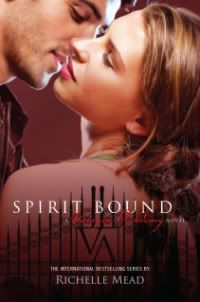
richelle mead, spirit bound

If you haven’t read the first four books in this series, then I must say: Warning, warning! Endless spoilers ahead! This action-packed supernatural series for teens has so much stuff going on that you’ll regret perusing this post ahead if you’ve ever considered reading it.

I’ve read a few supernatural kids’ books lately, mostly because it’s a large portion of the teen market at the moment. Of course we can blame Stephenie Meyer for this (amongst other things) for showing that writing about vampires as a metaphor for teen sexual angst can make you wealthy at an almost cartoonish level. Many authors have now been able to publish their supernatural books and they are very hit and miss. Of the new deluge of books, I’ve read some terrible ones, and some okay ones. Being that it’s not my favourite genre (though what is may be still up for debate) none of them have really been angels-trumpeting awesome, but as far as pure enjoyment goes, Richelle Mead’s Vampire Academy series is the best I’ve read.

Vampire Academy is the nickname for St Vladmir’s, a school for Moroi (vampires, but good guys) and dhampirs (humans with a Moroi parent, who are on this earth to guard Moroi.) The Moroi get a standard education, while the dhampirs get both a normal education and then guardian training as well, because they will only ever graduate to fight for the Moroi. Who are they guarding against? That would be the Strigoi: vampires who have killed another person, or someone who has been forcibly turned by another Strigoi. Rose, our protagonist, is a sexy ass-kicking dhampir, who is happy being a guardian for her best pal, the Moroi Lissa, but also wants to get out there and beat down some Strigoi. Things become complicated when her trainer, Dimitri, who is so irresistible that even readers want to smooch him, finally caves in to a relationship with Rose, boffs her in a shed, and then is promptly turned Strigoi three pages later. That all took three books to happen, and book four was spent with Rose tracking him down to Siberia, where he kidnapped her and tried to convince her to turn Strigoi so they could go on murderous sexy rampages for eternity. She declined and smacked him down, but had learned that maybe, just maybe, there was a way to turn Strigoi back into who they were.

Spirit Bound finds Rose and Lissa after graduation from St Vlad
’s, at the Moroi court, waiting to find what will happen with the next stage of their lives. Now is the time when the guardians are doled out to the Moroi, and while Rose always wanted to be with Lissa, she may not be able due to skipping school to head to Siberia for a few months the year before along with the endless dramas she gets caught up in, and because Lissa is a princess—and the last of her line—they need someone stable to guard her. So now Rose needs to show that she is a good influence, but because she’s the kind of person who will throw herself into ideas with abandon, she takes off, with Lissa and another guardian, to bust someone out of prison who could possibly help Dimitri. And I can’t really say more, because there are so many dramatic twists thrown in I’ll surely ruin something.

Vampire Academy is not a perfect series. It suffers from the overblown chapter endings I hate, where authors seem to feel the only way to get people to continue reading is to end a chapter with someone making a dramatic proclamation that leaves everyone reeling. To Richelle Mead
’s credit, she’s not as bad as James Patterson, who does the same thing but has literally more than a hundred chapters per book that all end like that—Mead does rein that in, to about twenty-seven chapters. The writing can be a bit standard and clichéd, and there is a fair amount of brooding about boys. But it is much less painful than Twilight, mostly because Rose is a much better female protagonist, who doesn’t just sit around waiting for boys to be violent towards her and each other (because that’s what they all do, right?) but jumps into the fray, is loyal to her friends, has a finely tuned sense of right and wrong, and makes it her life’s work to fight for what is just. She’s much more realistic, in that she sometimes jumps to conclusions, gets angry or jealous, and gets into petty fights when she’s in a bad mood. She’s sixteen at the start of the books, and teenager or not, that’s how people are. Fallible humans. She’s also up for parties, loves pashing boys, and doesn’t have to worry about the poor helpless mens unable to stop themselves hurting her during sex. She lives in a fantasy world, but the reactions of the people around her make it seem much more grounded in reality than other books. It’s also fun—some of these books are so depressing I can’t figure out the point of trying to save the world when everyone is so annoying—and Rose’s sense of humour sustains her and the reader throughout hard times. And this book, above all others, really slaps her with some hard times.

There are a lot of characters that dash in and out of the books. Some are frontline characters during the first half of the book and then vanish from thought by the end of it. It can be hard to keep up with who’s who, though Richelle Mead will explain who every character is—there’s just a lot of them, and it’s difficult to remember why Rose likes or hates them. (She doesn’t really do neutral.) Despite that, Spirit Bound, and the whole Vampire Academy series, is a rollicking, enjoyable read that covers some familiar ground, makes for some interesting new drama, and is a much better example for the Youth Of Today than Twilight. The final book’s out at the end of the year, and while I’ll pretend to be mature and indifferent, secretly I can’t wait.

Friday, November 13, 2009

jaclyn moriarty, dreaming of amelia

I often like to think that there will be one glorious time in my life when I have won the Dublin IMPAC Literary award (around $170,000), the Pulitzer Prize for Non-Fiction ($10,000 and a shiny gold medal), and the Astrid Lindgren Memorial Award for children’s writing ($800,000). At that point, I can realise my dreams of a) becoming a full-time writer and b) buying a life-size Wall-E robot. Anyway, to that end—and because I enjoy it—I try to read a lot of different genres. It also means that at work I can bluff my way through questions in every section of the store, though there are some (ie philosophy, theology, personal development) in which I remain stupid.

I plan on winning the Lindgren prize with a series of powerful books for young adults that tackle all the emotions and hardship of high school and life on the cusp of adulthood. I’m not quite sure how this will happen, as despite graduating only ten years ago I’ve pretty much forgotten everything that happened back then apart from having crushes on everything that moved and working in the school canteen so I could stuff my face full of candy for free. Still, readings books by authors like Jaclyn Moriarty are a good help in reminding me what the hell went on during those six long years.

Since her first book, 2000’s Feeling Sorry for Celia, Moriarty has been writing books set near Sydney and centred around two high schools, public school Brookfield (hooligans! ruffians!) and co-ed private school Ashbury (snobs! nouveau riche!) She has also written I Have a Bed Made of Buttermilk Pancakes for adults, and rewrote that for younger readers as The Spellbook of Listen Taylor, which I have not read as I had demolished Buttermilk shortly before. Her characters often overlap, mostly with best pals Emily, Cassie and Lydia, who have starred in Finding Cassie Crazy, had bit parts in The Betrayal of Bindy Mackenzie (otherwise known to me as The Betrayal of Fiona, because the character of Bindy was far too annoying to want to read about for 300 pages), and star again in Dreaming of Amelia. Now the three are in year twelve, and like the other books about these schools, the entire novel is written through notes, blog entries, letters, committee meeting notes, and English essays on gothic fiction. For this year has seen the arrival of two scholarship students, Amelia and Riley, who are so new and enticing and gothic-swoon-worthy that they the whole class goes aflutter. Along with these students, year twelve also sees the arrival of a ghost in the classrooms.

...or does it (etc)?

Excitable puppy-like Emily is convinced there is a ghost haunting the school. Lydia finds herself abandoned by her parents during the hardest year of her life as they leave for Tuscany to reinvigorate their marriage. Fellow student Toby becomes obsessed with black holes and the arrival of Irish convicts in ye olde Sydney. Amelia and Riley slowly come out of the shadows to reveal themselves, but only what they want everyone—and each other—to see. To be quite honest, the whole thing drags on far too long. This book is about twice as long as Feeling Sorry for Celia, which is a fantastic book and one I’ve read a couple of times. I won’t be reading Amelia again and feel it could have been condensed greatly, despite the fact we never even hear from Cassie, who stays quietly in the corner apparently having no problems at all. Switching chapters between characters is something I usually enjoy, but when something exciting is happening and you are suddenly stopped and changed to another, duller character, I found it much more frustrating than usual.

Jaclyn Moriarty has a great sense of humour and I found myself smiling like a goof quite often. The characters are all appealing, if samey at times. Dramatic Emily and her overuse of exclamation marks is enjoyable in small doses, but when it carries over to other, unrelated characters it feels quite fake. Constance Milligan, elderly busybody and Associate Chair of the Ashbury Alumni Association, adopts the same hysterical squealings, as does the ghost in Lydia’s English essay.

As the year flies by, so to do the student’s essays (surely so off-topic, meandering and bizarre that they would all fail?) and the ghost does stranger and more mystifying things. Unlike Moriarty’s past books, which all end on enjoyable bad guy comeuppance, this tale requires a leap of faith that I just wasn’t willing to take. This, regarding the parallel tale of an Irish convict named Tom, told through Toby’s English essay, is interesting stuff but felt to me quite artificial and put there only to show Moriarty’s knowledge of convict history in the neighbourhood these books are set in.


It wasn’t a horrible book by any means, and still a lot of fun, but it was too long. Don’t let this review put you off Jaclyn Moriarty as an author—Feeling Sorry for Celia and Finding Cassie Crazy are fantastic books, worthy of rereading and getting you into the heart of high school, albeit a sometimes sugar-coated version regarding how students treat each other. I’ll still be reading whatever she puts out next—and I’ll be hoping to see cameo appearances from all these characters again, happy in their post-HSC futures. And hopefully with more sex.