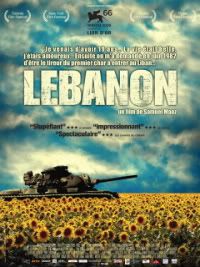
 It took filmmaker Samuel Moab almost thirty years to tell his story. It has been that long since the first day of the Lebanon war—June 6, 1982—when he was just twenty years old, and I was a few days off being born. As I was rolling around in the comfort of my mother’s womb, Moab sweated and shook behind the trigger of a tank cannon, tasked with the job of shooting anything that moved. It’s a thankless job: don’t shoot, and you may put all your comrades in danger; shoot, and you might kill an innocent civilian. Moab attempted to make this film years before, but couldn’t, the horrors of his experience too raw to recount. Finally, he was able to finish the script and make the movie he needed to. On a tight budget, and shot entirely within the confines of a tank—bar the brief opening and closing scenes—what he produced has won him accolades worldwide.
I will do everything in my power to not see war movies, generally. It seems awful and shallow to avoid what is a grim reality for a huge part of both history and present, but I usually find the machismo and bloodshed just too sickening. You’re much more likely to find me at a 3D kids’ flick laughing at a fart joke than in an arthouse cinema stroking my beard about the poignancy of camera angles. Still, when a movie receives as much attention as Lebanon it seems a good reason to get over my dislike and watch something so worthwhile.
Shmulik is a gunner, dropped into the belly of an Israeli Defence Force tank with loader Hertzel, driver Yigul, and officer Assi. They meet and shake hands, then are mobilised immediately to get to a road and wait for further instructions. When a car approaches, they are given their task: shoot to their left, then to their right, and if they don’t move, shoot out their engine. As someone who has previously “only ever shot barrels”, Shmulik freezes, endangering everyone around him; from that moment, the stage is set as real people—not Rambo-type heroes with oversized muscles and bandannas—are shown fighting with their emotions and each other as they struggle to survive the first day of the Lebanon War. Outside, the unit’s commander and his soldiers are face-to-face with the horror, with hostage-takers and the dead or injured, and trying with the tank to clear a freshly razed town. As the situation worsens, those in charge must deal with changes of plan, lack of backup and the subversiveness of inexperienced and frightened soldiers.
After seeing Buried and Devil I worried that 2010 was overdoing the claustrophobia* movie, but this felt much different. It is still an oppressive atmosphere, crowded into a tank with four men whose only view to the outside world is through crosshairs, but at least there are other people to see. With the faces of those destroyed by the war in sharp relief, however, it is not a beautiful world, but a devastating one. As one man stares down the sight, sharing a table in a town with a friend lying dead and bloody opposite, the trauma of the experience for everyone involved is made clear.
Immersive from the moment Shmulik lowers himself into the tank, Lebanon is a gripping and awful movie, with only one real moment of levity during a tale of an ill-placed hard-on in front of a teacher tasked to accompany a teenage Shmulik home after the death of his father. It’s hard to crack a smile during the story anyway, told as it is to improve the mood of the men in the tank, feeling alone and desperate in their dirty, aged, shelled tank with the walls covered in post-attack oil and soup croutons.
The sound design is ominous and alarming, the cinematography amazing when you consider the limited space. It is not a comfortable movie, soaked in blood and tension, but with tender moments as soldiers try to reach out with humanity during even the worst times in war. The devastation and tension of the first ten minutes does have the detrimental effect of causing the rest of the movie to feel slower and (mildly) less traumatising.
In summary: Meets Expectations, which were high after the glowing reviews. Lebanon is an important and devastating movie, and I am full of admiration for Samuel Moab in making such a personal film.
*Chris told me I wasn’t allowed to use the c-word word in my review because “everyone else has”, but that’s like not saying the word “tank” in this movie. If you suffer from claustrophobia, you probably shouldn’t see it, unless you’re at the Open Air Cinema and you’re driving home afterwards in a convertible.