Short stories, good short stories, take me a long time to read. When I read a novel I like, I barrel through it to get to the end, but in a collection of short stories, when they are wonderful, I take my time. I put the book away, physically reshelve it (as opposed to leaving it in the pile of books next to the couch, where all the crime books I review live) and wait until I need it another day. So it goes that reading a book of short stories can take me weeks, months, even years—I still haven’t finished Miranda July’s No One Belongs Here More Than You—because I have a choice about when I finish it.
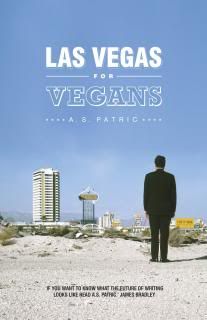
Las Vegas for Vegans was given to me by the author back when it came out, late last year, and I started it straight away. About five months later, I finished it on my couch, the baby finally asleep in her room, an expanse of time in front of me that was exactly right for Las Vegas for Vegans. I went into the study, retrieved it from the shelf (don’t laugh, it is shelved under blue), and read the final third that I had been saving for good, like a literary front room.
Even though I hadn’t read any of it for weeks, the first story I read today—The Bronze Cow—pulled me right back into the visceral world (or worlds, or dimensions) that he has created. They are enough that by the last sentence (and sometimes that is after ten pages, sometimes after a paragraph) you have already been as immersed in the story as you might have been by a full-length novel. They are all-encompassing, ethereal, grounded, amazing. I am not clever enough to know what is happening in all of them, but it doesn’t always matter. Some I read twice because the first time I was pulled along like a current and then it would end and I wasn’t sure what I had read. These stories are not always quite real, but they are really something, you know? Like when an old American man looks over a vista with the sun in his eyes and says, “That’s really something.”
It is the kind of collection that makes you rethink how words fit together and how stories are told. Some I didn’t like. Some made me sad. (And it isn’t a recommended travel guide for traveling vegans at all.) I have folded down so many corners for turns of phrase or scenes that struck me in some way that to put them in here would probably violate copyright and have me arrested. My only regret—and I know reviewers write this type of thing all the time but I am nothing if not unoriginal—is that I’ve now read them all, that the next time I have this quiet sleeping hour free, I won’t be able to read them fresh. I’ll just have to read them again.
Showing posts with label australian. Show all posts
Friday, March 22, 2013
Monday, September 17, 2012
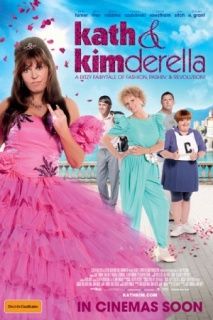
kath & kimderella
Have you heard of the sandwich way of criticism? It’s when you need to say something bad about someone who you’re trying to encourage, or who you like, or who will roll up their manuscript/screenplay/comic and beat you about the head with it if you are mean. (I am this person.) You sandwich the bad criticism between good criticism.
Like, for instance, Kath & Kimderella. I enjoyed the first season of Kath & Kim (I bought it on VHS, in case you were curious about how long ago it started). Kath & Kimderella is possibly the worst movie to ever grace the big screen. But Woodley was very funny.
See? A nice gentle criticism sandwich.
Kath (Jane Turner) and Kim (Gina Riley) are both angsting about the missing sparkle (or “vajazzle”, as Kath would and does say) in their relationships when plot encouragement occurs for them as Kath wins a competition at her local chemist for a trip to the Spanish outpost of Pampilloma, located in the south of Italy. Upon their arrival they discover that the whole place has gone bankrupt and their hotel has shut down, but after a tour of the local castle the king (Rob Sitch with luscious hair) misinterprets their knockoff label clothes as the real thing, assumes they’re rich and attempts to seduce Kath for her apparent wealth. His son, hiding his features behind a mask, falls for Kim after seeing her with a t-shirt that says PRINCESS on it in sparkles. Hijinks ensue. Sigh.
The central conceit isn’t really a problem—give me enough jokes and any plot is fine. But crucially, Kath & Kimderella is not funny. It’s not funny when Kath, Kim and Sharon (Magda Szubanski, along for the ride) go outlet shopping and the girls run around sped up like a Benny Hill skit. The same sped-up schtick is also not funny when Kath uses what she thinks is the castle’s gym but is in fact their dungeon (LOL HAHA except that it is actually totally a gym). It’s not funny when Kath and King Javier go for a ride on their Vespa against some green screen so obvious that it could almost be a joke, but just looks bizarrely cheap against the rest of the movie’s actually decent backdrops. It’s not funny when the plot stagnates halfway through, and it’s not funny that all the twists are completely obvious from the moment the characters appear on the screen.
It’s also confusing when the poor men, left at home to watch telly in their Snuggies, decide to go fight the royals for their women. Kath’s husband Kel (Glenn Robbins) commits an act on an airplane that would surely get him banished from all flights forever, but then turns up mysteriously in Europe five minutes later to save the day. And, even more mysteriously, arrives before Kim’s own husband Brett (Peter Rowsthorn), who was on either the same flight or an earlier one. Uh, spoiler alert. Also, Gina Riley looks amazing and while I certainly can’t rock a midriff top, I’m a bit over the whole “ugh, look at her in an outfit that’s too small lulz” thing. Wear what you want and get over it.
Oh hey, It wasn’t entirely awful. Kim’s cutting little digs were occasionally funny, and the cinema popcorn was nice, and the bit where the king and Kath address a crowd and Frank Woodley signs for the hearing impaired made me shake with laughter. This hasn’t made me dislike Turner and Riley, whom I admire greatly for making me laugh numerous times over the years, but I really did not enjoy this. Though I did just see a review on IMDb by summerblink that stated “To everyone who didn't find it amusing - there's so much of Australian culture you do understand. If you call yourself an Aussie, you should be ashamed.” And I’m glad people like it, honestly, but here I am in shame, saying I give it 9 out of 86 minutes.
Friday, June 17, 2011
h j harper, star league #1 lights, camera, action
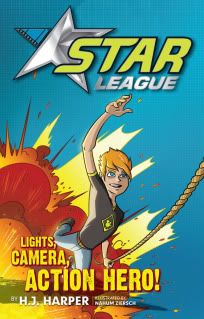
Book one opens with movie star Jay Casey heroically stopping some bank robbers in a commercial for the drink Fizz Force. As the filming wraps up, we learn more about Jay: he does his own stunts, swinging down from the ceiling and kicking a burglar’s legs out from underneath him; he’s kind, showing concern for the actors he’s just beaten up; and he’s a lonely kid, orphaned and with only his uncle/agent Jefferson as a friend. Then Jay finds out he’s up for an audition with the famous director Ben Beaumont—but it’s not an audition for a movie, but to join a new bunch of kids with the ability to save the world. There’s robot S.A.M., animancer Leigh, zombie Roger (full name Roger Romero, which is why I love Holly right there), werewolf Connor and ninja Asuka, and the first book shows the team meeting for the first time, and thrown right in the deep end with a dramatic kidnapping as the evil and awesomely named Professor Pestilence tries to use Jay’s fame to his advantage.
I like early reader chapter books because I can knock them out in a short period of time and feel like a Successful Bookseller. It’s also great when I like them and then have some proper advice to offer those who want to buy a book for the eightish-plusish market. (Younger kids will probably like having it read to them and older kids, like for example twenty-nine-year-old ones, might also like to snare themselves a copy.)
Having male, female and androgynous-robot characters means that all types of kids can see that anyone can be powerful and courageous, and makes the series good for kids who think reading about the opposite sex is gross/smelly/weird/boring or the parents that assume their kids think that way. Though to be honest, in many ways the children’s book industry mops the floor with adult books, sexism-wise, because there are female spies and agents and adventurers all over the place in the kids section but not as much in the adult fiction section. Hopefully kids who grow up reading books like Star League: Lights, Camera, Action Hero will end up writing books like Star League: Equal Pay, Equal Badassness. Or perhaps they’ll think of better titles. Probably.
Lights, Camera, Action Hero is fun, adventurous, a bit different, and manages to tackle the serious issues of being ostracised and feeling lonely while throwing in terrifying evil professors, killbots (my favourite kind of bot!) and jokes. Basically, it’s all you could want in a kids adventure book, with the added bonus of originality and warmth. Nahum Ziersch’s manga-ish illustrations are excellent, energetic, edgy and other e-words too: it makes for a good-looking read to go with the clear but not patronising language. And if you/your kid/your grandma likes it, there’s five more books in the series. You know what, you should probably just go buy them all at once.
Sunday, April 3, 2011
comedy festival: capital punishment
Saturday night at 10:45 saw Chris and I at the Town Hall to see Capital Punishment for the second year running. They’re a group of current/former Canberra locals who spread five acts over one hour and are kind of like when you get the Five Flavours Lifesavers from the milk bar and you’re super excited to get pineapple, raspberry, watermelon and orange, and you think you’ll get the gross cherry one, but then suddenly it’s another watermelon, and you’re all “YES!” and cheer and everyone in the street judges you on your unbridled enthusiasm. Rafe Morris bookends the show, playing an intro song we sadly only caught the audience reaction to through the door (lesson: just pay for parking in the city during the Comedy Festival, because there really is nowhere to put your car apart from on top of those pedestrians who walk out in front of you drunk) and finishing the gig with a trio of love songs that will pull at your heart strings and then cause some sniggering when you realise who he’s really in love with and that perhaps some of his soulful yearnings are more criminal in nature. He’s actually an amazing musician, which did have me sometimes doing that thing during songs where I’m too busy going, “Oooohh, isn’t this lovely-sounding” to actually pay attention to lyrics, which is of course my own fault, and why I can’t sing along to any songs and should be banned from trying.
Emo Parsonson hails from the bush and is happy to hark back to his childhood for gags, recounting his father’s slightly unkind views towards women, his own current parenting style, and my own personal favourite part, where he compares his new cushy city office job’s OH&S (Occupational Healthy & Safety for the uninitiated) acronym compared to the country, where, as he points out, it stands for “OH....Shit!” (I probably think this is hilarious because I like punning on it too, like yelling “NoH&S!” whenever someone at work picks up too many books or climbs a ladder awkwardly.) Emo has a relaxed, laid-back style, is great at audience interaction, commendable after being hollered at by the woman next to Chris, and despite the causal demeanour occasionally dissolves into fast-paced rants that cause the audience to get a bit unbalanced on their (frighteningly high) seats.
Greg Kimball’s tales of the pressures to have kids once you’re in your thirties (I’m shocked to hear this, I thought it was once you’d had a partner for longer than three months that everyone was on your back about it), and his own experiences as a childcare worker, totally killed me: declaring he took a group of kids to see Toy Story “or something, I don’t know, I was drunk” and then following it up with a kid’s adventure with her folding cinema seat. It was also good to see someone wrapping up a comedy skit with an educational lesson in health involving fresh chillies and what not to do after using them; there needs to be more attention paid to these important things.
Kale Bogdanovs had arguably the best joke of the night, one that I’ll try hard not to ruin for you but involved a particular Hasbro board game I’ve always adored. I think he lost about two minutes of his show’s run-time because the audience couldn’t stop giggling for long enough to let him say anything else. Otherwise, he’s an amazingly articulate comedian, not a misplaced word or an “um” in sight (my own public speaking exercises sometimes contain only the word “um”), and his observations of movie ugly ducklings are so astute I almost let out a “hell yeah!” except that there was already someone shouting at all the acts in my aisle and I didn’t want to make everyone evict us.
For something completely different, Dayne Rathbone’s stilted man-child act is so well-perfected that everyone was quietly snickering before he’d even really said anything, his comic timing and beaming awkwardness building the performance in such a way that is caused the kind of laughing that’s so all-encompassing it almost causes you physical pain. As he reads his self-penned book, “A Boy and His Dad”, including a scene acted out with an audience member laughing so hard she could barely read her lines, each page has such an unexpected concept stuck in the middle of an everyday, flatly read sentence that I was afraid I kept spitting on the poor audience member in front of me because I kept sputtering just as I thought I’d composed myself again. Because I don’t learn lessons like “he was funny just then, perhaps he’ll be funny again?”
In Summary: Exceeds Expectations, because even though it was funny last year, I’d forgotten how funny. There were occasional flat moments—I mean, find me a comedian that doesn’t—but within another minute you were chortling/snorting/screeching/whatever-your-laughter-style away again. It’s pretty blue, too, so don’t go taking your eight-year-old to see it, or your eighty-year-old parents, unless you want to spend another night with them shaking their head at you and saying, “I don’t know what I did wrong.” Go buy your tickets here, or send them nude pictures here.
Tuesday, March 29, 2011
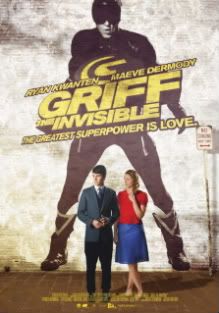
griff the invisible
In the dark of night, when crime is creeping up on unsuspecting civilians, the person to save them is Griff: clad in a yellow-and-black suit, strong and brave, he will defend the citizens of his town the best he can. With an amazing security system and cameras all over his neighbourhood, he knows where to go and when to help. But when daytime rolls around, he struggles in normal society. Bullied at work by the mean-spirited Tony, he stammers and blushes his way through social interactions and only slight loosens up around his own brother, Tim. It’s Tim himself who first reveals, holding up a poster of a poorly-drawn representation of the costumed Griff that are plastered around the neighbourhood saying DO YOU KNOW THIS MAN?, that this is not new, and that Griff has been in trouble for this before. And before long, you are left questioning: is he a superhero? Does he have superpowers and a line straight to the unnamed commissioner?
There are a lot of everyday-superhero movies out at the moment, from the recentish Kick-Ass to the very recent Rainn Wilson vehicle Super, and it has become such a genre of its own that I couldn’t even convince my spouse to see it with me, so bored was he of the idea. But the limited scope of Griff—you never go out of the neighbourhoods he works and lives in—means it becomes much more personal and involving, less about action and fight sequences and more about the mental state of its main characters. Along with the painfully shy Griff, there is Melody (Maeve Dermody), Tim’s new love interest and a scientist who believes she should be able to walk through walls. And while it’s Tim who finds Melody at a Chinese takeaway restaurant, it’s she and Griff together, realising almost instantly that they have found a kindred spirit in each other, that make the film so wonderful: they are cuteness personified, laden with quirk and attractive without the overly made-up perfection of Hollywood movies. Despite the superhero plotline, it’s a movie that smacks of familiarity, and can I just say, it is so nice to see an Australian movie that’s not about a) bogans, b) death, or c) bogans dying. There are suitably Australian turns of phrase but with none of the cultural cringe that movies like Sanctum make you suffer from. (The phrase “yum yum chook’s bum” is uttered, but it’s contextually appropriate and kind of funny.) It’s the kind of Australian film you wouldn’t be embarrassed sending to your overseas pals on DVD if not for those pesky regions.
It’s a gorgeous-looking film, with the reveals of Griff’s surroundings over time heartbreaking and simplistic. The camera loves the beautiful Melody, and it’s well-shot even within the confines of the limited areas and spaces used. The soundtrack is good enough to make me go to work and whine that we don’t have it in yet, and the sound design also zippy. The film, however, does drag on a bit, despite its short running time, and goes through so much happy! sad! together! apart! that you’re a bit done with it by the end. There’s also a couple of fun things, like Griff’s fights with steampunkers in alleys, and Melody’s habitual clumsiness, that happen at the start and then vanish towards the end, leaving you feel cheated of the things that made you feel so warm towards it in the first place. But really, it’s the characters that make Griff the Invisible so great, with Tony someone you’d really like to see blasted into space by a cannon (spoiler: this doesn’t happen), Tim someone well-meaning but ultimately painful to talk to (“Anyhooo, we better goooo,” he will say awkwardly), Melody’s concerned but adoring parents (Heather Mitchell and the always utterly utterly fabulous Marshall Napier), and Griff and Melody themselves, superheroes, super weird and a couple to be held in high esteem by outsiders everywhere.
In Summary: Meets Expectations. I couldn’t say it’s the greatest movie of our time, but it is absolutely a sweet little movie to spend an afternoon watching, and then you could go out afterwards and take Melody’s advice: protest a protest, or Google Google. Or go punch a bad guy in the street. Whatever floats your boat.
Saturday, February 5, 2011
sanctum
Based loosely on a true story, a team of cave divers are splashing about in a huge deep Papua New Guinean sinkhole, hoping to discover new cave systems, when a cyclone approaches at high speed and traps them underground. In order to survive, they must make their way through unchartered territory, underwater and with great danger. Will they all live through the journey? God no, but I won’t tell you who does and doesn’t. Suffice it to say it is much less of the docudrama it appears on the ads and more a gorefest by the time the credits roll.
The bulk of the movie is spent following a small band of survivors: gruff old bastard Frank (Richard Roxburgh), son Josh (Rhys Wakefield) who is currently on Frank’s “shit list”, arrogant boss Carl (Ioan Gruffudd), Carl’s mountaineering girlfriend Victoria (Alice Parkinson), old hand and resident Nice Guy George (Dan Wyllie), and local guide Luko (Cramer Cain). They are all decent actors doing the best they possibly could with such a godawful script. Australians are defined by the fact that they say things like “This whole place will be flooded like a blocked dunny!”, Americans by their terrible accents and unconditional arrogance, and Papua New Guineans by their quiet wisdom and heroics. None of them characters are particularly fleshed out, leaving you mostly indifferent as they are picked off by the cave and/or water.
Full of so many plot holes, discrepancies, and under-explained situations that even my usually generous mother rattled off a list of problems she had with it, Sanctum is painful enough to make you snort at inappropriate places and so riddled with clichés even the guys behind us were laughing and yelling out, “Let Josh do the climb, Frank, it’s your son’s time to shine!” during the most moving of scenes. Every plot turn is mapped out so far in advance you felt like Josh’s whinge about his father giving him a boar’s tooth necklace that he’d turned into a torch was basically him holding it up saying, “Look at this plot device my father gave me, expect this to be handy later.” The characters’ bad decisions bit them on the arse just exactly how you expect them to, some comeuppances swifter than others. Some appear to be painfully stuck in—like Victoria’s rejection of wearing a “dead woman’s wetsuit”—so they could shortly thereafter have a scene of her stripping naked to battle hypothermia and we could all get an eyeful of a hot woman in her undergarments. After all, none of the men end up naked but for Speedos.
Not only does Sanctum dismally fail the Bechdel Test, but the women are hysterical and irrational. Victoria—who met Carl while climbing Mount Everest—somehow later needs some lessons to climb up a short ladder, though she could theoretically be the best climber of all of them. She is inexperienced in caves and holds them back, which is frustrating because she’s also the only woman at that point and really, the girl being the helpless one is such an overdone movie trope that James Cameron should be sent angrily to his kennel followed with another angry “NO.” Along with that, the one joke in the whole film (“That’s not a wizard”) is preceded by The Chaser’s Andrew Hansen doing a gross mimicry of an Asian accent when greeting the party at the above-ground base of operations. I don’t often mention the political incorrectness of movies in this blog—others do it much better than me—but really, like Cameron’s Avatar, this was a movie where the White Man saved the day, and women and locals did not.
Sanctum was not actually the worst thing I’ve ever seen. (Maybe second worst.) Despite my lack of concern for the characters, as they died or were injured the scenes were amazingly crafted and heart-wrenching, but only for what they portrayed, not who they were. Seeing a character “put out of their misery” when injured too badly to continue is hard to watch and was handled well. This, peppered with some suspenseful scenes as the team fight through underwater tunnels, and a poignant moment with Frank in a decompression bubble looking bleak as a drowned body is suspended outside in the water, give it points. The actual surrounds are amazing, from the breathtaking huge hole in the ground as Josh, Carl and Victoria arrive by helicopter, and the caves themselves are as beautiful as they are claustrophobic and terrifying. Much has been made of the cinematography, but with about two-thirds of the flick being green-screen, the special effects team deserve more recognition. Unfortunately, unlike Avatar, the effects alone aren’t enough to make Sanctum a worthwhile trip to the cinema; just don’t go. If you want to see a cave movie, watch The Descent and bring a spare pair of pants. If you want a father-son reconciliation, watch The Simpsons (that happens in about every third episode.) If you want some lush visuals, take a bus to the country with the fifty bucks you’ll save forking out for 3D tickets, then send me your change in thanks.
In summary: so far Below Expectations it is practically underground. I mean, really. The use of the decompression bubble was confusing—sometimes needed, then sometimes not an issue, or one that could have been explained away in a short sentence. For those of us not cave diving with our spare time, its use seemed arbitrary. Also, why is Josh even there on the trip if he hates cave diving so much and thinks caves are stupid? And who the fuck wrote the line “[this tunnel is] tighter than a nun’s nasty”? Or coached Welsh and Australian actors Gruffudd and Parkinson in their forced American accents? Or thought that “You need to go easy on him” and “He’s a good kid, Frank” weren’t the second and third Most Uttered Lines in movies after “Behind you!” BAD JAMES CAMERON. BAD. GO TO YOUR ROOM.
Friday, November 26, 2010
songs for nobodies
Songs for Nobodies was the final play for our final Melbourne Theatre Company subscription, as the prices for subs when you’re thirty or older become far too expensive. (I hold Chris entirely to blame; I don’t turn thirty for another year, but refuse to see plays by myself because then who will I be able to whisper “they were on the telly!” to?) Fittingly, we saw our first and last plays in the same theatre—the Fairfax, in the Arts Centre—and we were also running late, as we were for our first play. Here I should mention how lovely MTC staff are when you turn up late, wracked with guilt and apologetic—they tell you how long until you can enter, set you up in a chair, and turn on a television that fuzzily broadcasts the play as it is performed. The people we had to clamber in front of were less excited, but hey guys, YOU try turning right in our car at the moment: it’s a fine and stupid art.
Songs for Nobodies follows the story of five separate women: the first, a woman who meets Judy Garland (this is the bit we arrived late for, so I am not as clear as I wish I was); an American usher glowing after her experience with Patsy Cline; an New Yawk journalist setting up an interview with Billie Holiday; an English librarian recounting how Edith Piaf saved her father’s life; a young Irish woman working on a cruise ship packed with temperamental celebrities, including Maria Callas. In each story, the most notable tunes by those singers will also be performed along with a band and—while many of the tunes are not particularly high on my list of favourites because I have heard them so much during my life—listening to them performed six feet in front of you by an artist who gets them all absolutely pitch-perfect was one of the most amazing theatrical experiences I’ve had.
Without a performer of the calibre of Bernadette Robinson, this play would be nothing. But listening to her get every accent right, all while wearing the same sharp outfit, utilising the minimalist, slightly art-deco set, and becoming five completely different people—she is incredible. As the librarian, she looks austere, walks with her head held high and speaks in a clipped accent that is nothing less than convincing. As the Irish teenager, fresh out of a relationship with an “evil bastard...no, he isn’t a bastard, but he is evil”, she is all sass and and lopes around the stage, recounting her tale with delicious drama. And when she sings—oh—you’ve never heard anything like it. Or you have, because she sounds so much like the singers she’s emulating that the hairs raised up on my arms and I leaned forward in my chair, beaming at this woman who, moments before, had been an aspiring journalist nicknamed Too Junior Jones, and then suddenly became Billie Holiday, singing the always moving Strange Fruit. It really is something.
The play isn’t all singing, though, and the little snippets of existence we get from the women are of equal interest. They are funny, and smart, and appealing. When the librarian makes a crass joke with her beautiful voice you can’t help but giggle; when the usher accidentally walks in on Patsy Cline you are excited for her, meeting her idol. Bernadette Robinson is an absolute revelation—to me, anyway, as she is a well-known performer. Joanna Murray-Smith wrote the play for Bernadette, and it is hard to imagine anyone else in these roles, able to sing as five loved stars, and to act as five anonymous women whose lives were changed by them.
I didn’t even make any jokes in this review. That’s how blown away I was by this play. It took away my propensity to be ridiculous and filled that part of my brain with awe.
In summary: Exceeds Expectations and the perfect end to our subscription. I also want to know who styled Bernadette’s hair, because it was great. If I could complain about anything, it would be that it started on time so we missed the beginning. Damn efficient MTC.
The Songs for Nobodies season runs from November 5 to January 15, already having been extended, probably due to an excess of awesome.
Monday, November 22, 2010
the loved ones
Teenager Brent (the preppily named Xavier Samuel, who was vampire ringleader Riley in Eclipse) is living a typical schoolkid existence: he motorboats his girlfriend Holly (Victoria Thaine) in her Volkswagen Beetle, listens to hard rock, and fights with his mum. What is less typical is that he’s trying to cope with the car accident that took his father’s life six months before, and in that respect, he resorts to cutting, and spends his afternoons either in the darkness of his room, or searching for release in the dangers of the Australian landscape. When he is asked to the school dance by the slightly awkward Lola (Robin McLeavy), he turns her down; he’s kind enough, but it wasn’t the answer she wanted. And as Brent listens to his iPod and broods in the bush with his dog, Lola’s dedicated dad (John Brumpton) does what any father of a slighted girl does: he knocks Brent out, chucks him in the back of his ute, and hoofs it back to his place so Lola, decked out in a pink frock and matching shoes, can get the night she wanted so badly. And while Brent’s best friend Jamie (Richard Wilson) enjoys a typical dance with the hottest black-wearing girl in school—the glum Mia (Jessica McNamee)—by smoking a buttload of pot and embarrassing himself trying to impress her, Brent himself is dealing with drills, knives, hammers and the very real chance of a lobotomy, all underneath a disco ball in the kitchen of one of the creepiest families you’ll ever see on film.
It’s an authentically Australian movie without being throw-another-shrimp-on-the-barbie ocker. The landscape is that kind of local country you could find just at the end of the train lines; the house interiors could be any of your friends’ homes; when in the school grounds, the lockers could be yours from year eleven, all scratched up from your combination lock grating against it. I am obviously biased in this sense, being from Victoria where this was shot, and possibly even in the neighbourhood—the end credits thank the Whitehorse City Council (where I live now) and the Yarra Valley City Council (where I used to as a kid.) Heck, when the credits rolled, I realised I actually knew two people in the crew as well. The Loved Ones portrays Australian life convincingly without being cheesy or overdone. (Though when Lola’s father hammers one message home to Brent, he does snarl, “That’s for the Kingswood.”)
Half of the movie is spent in Lola’s kitchen, claustrophobically trapped by her and her father, surrounded by glitter and sparkle, and with Brent attached to a chair and wearing a snappy suit. Those scenes are truly, utterly scary. The two, and a very quiet third house guest, are so completely unnerving with their insanity that they’ll undoubtedly be haunting my dreams. Lola, brought up by a father whose is clearly unhinged, has no moral issues with what she is doing. Her father is doing everything in his power to keep her daughter happy. There is a deeply disturbing undercurrent (actually, maybe just a current) of attraction between the father and his “Princess”, which will keep you just as squicked out as the mild torture-porn they inflict on poor emo Brent.
The other half of the movie takes you out of the devastation of the home and into the lives of others: Brent’s mother, as she waits for news of her son; Holly, as she waits in her party dress for her beau to come home; Jamie, as he bumbles his way through the night of his dreams. Jamie is really just there to alleviate the mood; one of the hardest scenes for me to watch was immediately followed by a riotous bit of slapstick comedy from the clumsy Jamie that literally had the audience coughing on their popcorn and laughing well into the next (probably inappropriate) scene. Rather than detracting from the tone of the film, it made it a much more enjoyable movie. There was a lot of humour for a horror movie, with Lola’s tantrums and glee overdone to the point of hilarity, while still—admirably—remaining scary. As the film goes into a glowing slo-mo play of Lola being crowned the queen of the dance with a pink paper hat from a cracker, it is an amusing yet chilling look into the headspace of poor deranged Princess.
The acting is top-notch, with the everyday teenagers spectacularly natural even as they are damaged; Brent bears his torture with the appropriate amount of screaming; Princess is bonkers but had you feeling sorry for her at the start of the movie, and survived her many close-ups looking perfectly like a five-year-old who didn’t get a lollipop at the supermarket; her father, flitting between proud, overprotective, eager to please and Candyman-scale terrifying, will have you scared of meeting any potential in-laws for decades to come. The sound engineering was so convincing in parts I wanted to cover my ears and run out screaming; composer Ollie Olsen’s metal soundtrack was also a perfect backdrop to the piece.
In summary: Meets Expectations, because I’d read a whole pile of glowing reviews and expected it to be good. It really is. The only things I didn’t like about it were that Princess looks alarmingly like the girl who does my eyebrows, and that everyone who was playing high school kids were all the same age as me, though I was completely convinced they were seventeen. But that’s just wrinkle-induced jealousy.
Monday, November 1, 2010
tripod vs the dragon
Musical comedy is a little trickier to judge. I like to laugh. (A strange quirk, I know, but there you are—one of my most embarrassing and intimate secrets revealed to all.) But I don’t like musicals. A quandary! But when the suggestion came up from lovely co-worker D to accompany her to see Tripod’s new show Tripod vs the Dragon, on the day it was getting filmed for DVD, I said a firm hell yes. Because comedy is funny, and I’d never actually seen a full Tripod show—only skits on those epic musical all-nighters they show on TV when the comedy festivals come out. Now was the time to branch out, so I practised my ridiculous laugh so that I could be heard clearly when I purchased the DVD later. But that was only 76% of my reasoning to go.
Tripod vs the Dragon is the musical tale of a game of Dungeons and Dragons, with our three Tripod heroes, Scod (Scott Edgar), Yon (Simon Hall) and Gatesy (Steven Gates), chancing upon a map that has a mysterious missing area. They decide to explore, but will they listen to warnings about a dragon in the area? Of course not, because it’s called Tripod vs the Dragon. This differs from other Tripod performances by the addition of jazz songstress Elana Stone, who really should have caused the renaming of the troupe to Quadpod, as she was quite a useful (and vocally as well as visually gorgeous) member of the group. As game master and an important part of the story, she stole the heart of poor goofy Gatesy, and the audience too.
It was hilarious. Some jokes made me feel deep, lasting regret that I had not gone to the bathroom before the show. Tripod was pleasantly sweary, and they bang out a good tune. They harmonise beautifully, and are clearly talented musicians. They’ve got fantastic chemistry and have clearly been honing the skill of being scathing to each other for years. Elana had great comedic timing, and fit in just fine. Some of the story was told through shadow puppetry, purposefully simplistic and thus fantastic, and those were my favourite parts. What can I say? I love a good cardboard cut-out.
It didn’t really alter my opinion of musicals being one of my least favourite types of comedy, but it’s definitely my favourite kind of musical theatre. It was fun and funny, I had a blast, and the fact that they were filming a DVD means that this could be my big break into the film industry. Well, maybe if we hadn’t been in the second row from the back. The actual DVD recording aspect was quite entertaining, with them explaining to us what was going on, cameras all over the place, and an understandable blanket ban on toilet breaks during the show. When they had to repeat a skit at the end to make sure the sound was right, it was like we were old pals and they were asking us a favour. They also left the theatre just after everyone else and will happily stand around and chat. Because they’re cool.
In summary: Meets Expectations. I thought they’d be funny, and they were; I thought the songs might occasionally be repetitive, and they were. But it’s okay; it’s still a million times better than listening to the Top 40. (I say this, but as I seem to be only listening to the new albums at work, I don’t really know. For all I know Justin Bieber and his ilk might actually be quite talented.)
Monday, October 18, 2010
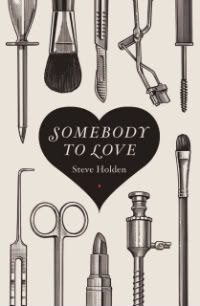
steve holden, somebody to love
Our heroine, the mortician, is in her family’s funeral home, preparing three bodies for burial: the Esterhazen girl, the Kremmer boy, and Mr Phillips, a man who entrances her even in death. As she readies these cadavers for their final rest, she reflects on the life she’s led. From the family that taught her the trade to her journey to changing her body to reflect how she is, every cut and touch of makeup is the product of the years before her.
It really is an exercise in language. And like James Joyce’s similarly verbose Ulysses, it’s not really my bag. It’s a bit hypocritical for me to say so when the fiction I write is just as tangential and plotless as they come, which means I count a lot on my use of language, but I am possibly biased and clearly see myself as some kind of Fabulous Exception to the Rule. The mortician thinks in the kind of distinguished language that, if conversing in real life, would immediately put me on edge and feel I was being condescended to. One does not use the word “I” if “one” can be used to refer to oneself instead; indeed, the word indeed turns up at the start of a sentence so often I considered getting out a highlighter and counting, except I was worried my highlighter would run out of neon. Sure, the main character doesn’t have to be someone immediately likeable to be an interesting person to follow—like in A Confederacy of Dunces—but in this case, I found it far too frustrating. She is an unreliable narrator—seemingly paranoid of other people’s reactions to her, but without supplying enough information to know if she has a basis for it or not. Like so:
‘I see,’ she said, turning quickly, her eyes glinting, I believe, with malice. Mrs K, it is a known fact, is a vicious woman, sudden to anger, ready to wound, and in that moment she meant, undoubtedly, ‘I have your measure, I will punish you for this.’
(I do, however, feel I have met a kindred spirit in someone who like the comma as much as I do.)
In some cases, things were not explained enough; other subjects were banged on about repeatedly. It’s also something I wouldn’t recommend for anyone with a prudish constitution (necrophilia by page two—a new record!) and if you’ve recently experienced a bereavement, the graphic explanations will not make you feel better, though the care that the mortician puts into it is at least mildly comforting.
It is, in an understated but visceral way, one of the most violent and dark books I have read. Beauty is stripped to dark, and everyone within the book’s pages has their secrets—the funeral industry included. Some of the violence will happen with such smoothness, clouded by gorgeous words, that you will barely notice it happening. It has some beautiful moments of realised horror, delicately atmospheric and engaging. Every word, item and action is in its place. Some turns of phrase struck me as a bit odd, like the following:
There is, at the top end of the cemetery, a fence of trees laced with a passionfruit vine. It was a most welcome place to shelter on account of the warm afternoon, curtained by the fringe of fruit that hung grimly like testicles, hard and green, against the sunburned iron heat.
Now I understand her own male genitals were a source of concern for her, but testicles are not hard and green. If so, see your doctor. Just some advice from your friendly neighbourhood bookseller.
Frankly, the elegant language made it a difficult undertaking, and I had to reread sentences to try and understand what was happening; sometimes I just gave up and moved on. The plot jumped back and forth in time and often I had no idea where I was or at what point in the chronology of the story. It was kind of like when you’re stuck on a train next to the window, surrounded by a stack of third-year uni students who are loudly retelling the story of the Nihilist Party they threw on the weekend and trying their best to impress each other with their Word-of-the-Day-Calendar knowledge, but are all slightly too drunk to remember the order of events clearly.
There are a lot of books out there that have given me a similar reaction that have gone on to win ridiculously well-paying prizes and the accolades of millions. I’m the first to admit that just because I didn’t like something it doesn’t mean it’s not worthy, or that it won’t make your Top Ten Desert Island Reads. But this is not in mine.
In summary: Below Expectations. The past two books I’ve read by Tasmanian authors have been linguistically challenging for me (the other being Anna Dusk’s Inhuman) and I am now wary of crossing Bass Strait in case all the signs are in fancytalk or covered in werewolf blood.
Thursday, October 7, 2010
anh do, the happiest refugee
You may recognise Anh Do, Australian comedian extraordinaire, either from his standup or from stints on shows like Thank God You’re Here. He’s always there with a smile and ready to make you laugh. It’s basically impossible to keep a straight face around this man. With the release of his autobiography, The Happiest Refugee, he will make you laugh—but I found it wasn’t the continually hysterical book I was expecting. Not because Anh isn’t funny—he is—but because his life hasn’t necessarily always been the most wonderful.
At age two and a half, Anh travelled from Vietnam as a refugee with much of his extended family in an overcrowded boat. They were attacked by pirates—twice—and barely survived the trip that left them in Malaysia. When they were eventually sent to Australia, life remained difficult as Anh’s parents struggled with limited resources in every way but one—family. The strength of The Happiest Refugee for me lay in the fact that Anh’s story is such a universal and inspirational one, where determination and love was how this boy who almost died in the sea became so completely awesome.
Anh has this wonderful casual writing style that kind of makes you feel like you’re having a chat with a pal rather than reading a book. Without trying to sound insulting, it’s a simple and straightforward read, but that is also part of what makes it so entertaining. It’s relaxed and friendly. You probably by now get the hint that it’s cruisy and I liked it. Moving on.
There’s a lot to be heartbroken about in here. When Anh’s aunt is almost taken, naked and horrified, by the pirates. When his uncle’s dead body is found by the water in Vietnam. When his parents, such a strong and loving influence, split apart as his father leaves, and his mother has to struggle to raise her family on her own. When he finally is able to contact his father again, years later, only to find he is seriously unwell.
But within all this is such hope and wonder, and Anh’s family so wonderful and supportive, that it’s the kind of book that makes you want to go out and have a thousand kids because they’ll all end up as great as Anh and his siblings. Right? Right. Even his father, not a great example all the time, has his own heroism: saving his wife’s brothers from a concentration camp by borrowing a communist officer’s uniform and boldly walking into the camp and declaring that he needed to take those two men with him. It’s a moving story, and knowing the horrors of the life he led gives some insight into how Anh’s father may have reached a point of anguish where he thought there was nothing to do but leave. The sacrifices that Anh’s parents make for their families is truly something to behold.
One thing I loved about this was just how familiar the existence of the family was once they hit Australian shores. There was embarrassment—Anh’s brother Khoa had been given lovely lacy girl’s clothes by St Vincent de Paul’s kindly nuns—and there was the everyday life they led. From watching MacGyver, to keeping budgies (we had an aviary in our backyard), to wearing knockoff runners to school (I had a kid crawl under the table and yell out to the class that I was wearing Traxx shoes from Target instead of the pump-up Nikes everyone else was), it was great to just read about the early life of what was really many Australian kids and be reminded of my own. As an adult, Anh was a fantastic entrepreneur, coming up with countless fantastic moneymaking ideas, not least the idea of studying law. And just as he was applying for numerous, well-paying, fabulously corporate jobs, he had a better idea: to become a comedian. And thus we have Anh today, making us laugh on television and writing great books. But I’m sure he would have been a great lawyer. I can tell because I have proof that he is a very smart man.
Takes one to know one, I guess.
In summary: Exceeds Expectations. I’m going to recommend the hell out of this for Christmas presents, because it’s a hard book not to like.
Wednesday, August 4, 2010
leanne hall, this is shyness
Luckily for me, she won the Text Prize for this not just because she’s really nice in reality (ruining my illusions about being able to bribe publishers, alas) but because This is Shyness is legitimately, fabulously good. From the first chapter I was smiling happily to myself about all those lovely pages ahead that I knew I was going to enjoy. And I did.
Wildgirl is in the unnerving suburb of Shyness for the night, doing her best to get away from her problems—her disinterested mother, and the awful breed of monster known to some as the classmate—when she meets Wolfboy in a bar. Wolfboy is also shrouded in issues, but the two of them see each other across the room, and that’s it—they see in each other someone they want to know better, and they blow that popsicle stand and head out to a night filled with endless possibilities. And, in Shyness, it’s a night with no eventual dawn. Shyness is a place that has been abandoned by adults and the sun itself, where sugar is the currency and drug of choice, and somewhere Wildgirl wants to experience with someone who knows it well. And so together they navigate this odd place and its residents, from criminally-inclined under-12s after their filthy sucre, to mystical kebab makers and sinister doctors.
It’s a story that charts exactly the thrill of being a teenager; how life can become so awful that escape seems like the only option, but how hope and confidence can still be found in the face of the adversity that can come with youth. Wildgirl is overwhelmed in some situations and breezes through others; Wolfboy seems about the most physically attractive fictional character in the history of the novel (quiffs, tight jeans, swoon) but he is out of his depth in some situations. The two of them are the heart of the story; two fascinating and gorgeously real people in a world both strange and familiar, wading through life and sticky situations the best they know how. When Wildgirl jokes around you laugh with her; when Wolfboy hurts you feel for him. The other inhabitants of Shyness radiate personality, and the town itself feels like a dream but smacks of something real.
Sometimes, though I’m not yet thirty, all the sparky emotions I felt when I was a teenager seem very long ago. This is Shyness brings them all back, and while the idea of an endless adventure of a night made me a little unsure at first—all the endless nights I remember from being a teenager involve everyone getting drunk, a short bout of frenzied dancing followed by hours of Deep and Meaningful Conversations About Stuff And Things—what This is Shyness is really about, for me, is being able to find, even when everything seems impossible and hopeless, someone else out there who will hold your hand and simply be there.
I’m biased. But I loved it. And, much to my excitement, I knew about half the people on the acknowledgments page, though shockingly I was not on it. And I’d imagined the moment so clearly: “And most of all, thanks to Fiona, who I met after writing and editing this book, but who distracts me at work by yabbering on about nail polish and her own writing. This couldn’t have been done without you.”
Tuesday, June 29, 2010
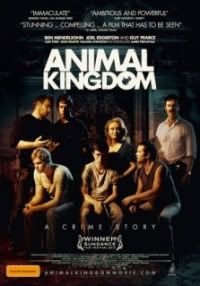
animal kingdom
Animal Kingdom is the tale of a criminal family—a film based loosely on the Walsh Street killings, immortalised in book form by Tom Noble (who cameos in the film as a warden) and translated for the screen by David Michod, who also directed and can barely walk now for all the plaudits loaded upon him. Joshua “J” Cody is a teenager who has just lost his mother, and with no one else to turn to, calls his estranged grandmother for help. Smurf, as she is known, takes him in, and thus he is brought into their criminal lifestyle, where violence and drugs are the norm and armed robbery is how they make their income. The cops are watching their homes and everyone is nervous. Throw in a new young member of the family and, frankly, it can’t go well.
This is a good movie, no doubt. It has an all-star cast, with Jacki Weaver as Smurf, Ben Mendelsohn as J’s uncle Pope, an Edgerton as family pal Baz, Guy Pearce as policeman Leckie, and newcomer James Frecheville as Jay. The plot is real and interesting, the locations excitingly, well, local (note: may apply to myself and my nearby readers only) and the script tight. Despite the subject matter, it is never gory or overtly sexual just for the sake of it. But after hearing the words “amazing” and “incredible” used to describe it, I don’t think it could live up to how fantastic it was going to be in my head.
The problem was investment. Not the financial kind—especially as I had a couple of movie vouchers lying around to get me in—but the character kind. With virtually everyone in the film criminals, including some of the police force, I just didn’t care if everyone died. J’s family were all terrible people who killed and stole and were mean to women. J himself kept a blank face devoid of all charm. To be honest, apart from J’s girlfriend’s gloriously normal family, the only person who wasn’t a giant tool of some kind was Guy Pearce’s Leckie, and he had such a bad moustache that I couldn’t muster up the energy to feel for him either. Which is fine—not everyone needs to be charming to be deserving of life—but it meant that tension was lacking, unlike Harry Brown, where you were desperate for Michael Caine’s Harry and Emily Mortimer’s police officer to survive, and every moment with them in danger was spent on the edge of your seat. It was, however, a brilliant portrait of criminal families, and Jacki Weaver’s Smurf is possibly the most reprehensible of them all: a woman who will not dirty her hands with criminal acts but who shamelessly adores her sons and will do anything in her power to keep them happy, manipulating whoever she can to do so.
There are no down-home comfort moments, no times of levity to understand why the family unit is a bearable one. When I was in high school, I went to a friend’s house once to find an unnerving situation: his mother sitting at the dining room table, chopping the marijuana they grew in their backyard into a little bowl, while her sons let out their anger with violence against the walls or the people around them. It was an awkward, bizarre and faintly dangerous situation to me, and while movies can never compare to reality, I felt little of the same anxiousness watching Animal Kingdom that I did that day.
Animal Kingdom is a worthwhile watch, but I didn’t shake with fear or cry, and I bawl in pretty much anything, including ads for Domestic Blitz or similar help-related television shows when the family looks thrilled about whatever’s happened. It doesn’t take much to set me off into emotional turmoil, and I felt strangely distanced from the whole movie. Still, if you love Underbelly, or hearing someone say the phrase “Bridge Road, Richmond” so you can yell at the screen, “I totally go there for coffee sometimes!” then Animal Kingdom is the film for you.
Wednesday, April 28, 2010
the grenade
Political advisor Busby McTavish comes home to his beloved family one night and finds a live grenade on his lounge room floor. Who would do something like this? When you’re in politics, it could be anyone—or perhaps it’s an enemy of his teenage daughter Lola, because all teenagers have enemies. Or is it someone closer to home? Could something like this twist your trust in your family? Busby takes charge, turns his house into a fortress, and watches his family’s every move. And somehow, it’s hilarious.
After all these plays it still takes me a while to warm to seeing people physically in front of me acting and to let myself get involved in the world of theatre after being so used to cinema, where, because it’s onscreen with elaborate sets, you can abandon yourself to that “reality” much easier. But happily this didn’t take long, distracting me with jokes straight away—and the flawless set helped. A rotating stage held four different scenes, some malleable, all perfect, though most of the play was set in the McTavish’s plush lounge room and kitchen. The faultless lighting turned the rooms into night and days so realistic I was almost surprised to find it dark outside when I left. The sound seemed a bit low at the start (or I have been listening to my iPod with the sound up too loud again, a probable alternative), but then became pitch-perfect, with fitting dramatic musical interludes as the set revolved to the next scene. So, top-notch production, meaning that at the end when the actors gesture to the crew of the play I was clapping just as hard.
Garry McDonald surprised me by cutting quite a dashing figure, trim in his nice suits and still looking the same (from the upper level of the Playhouse, anyway) as he did twenty years ago. Busby’s wife, ex-nun Sally, is played with beauty and naive humour along with the fraught panic of a new mother by Belinda Bromilow; Neighbours starlet Eloise Mignon shines as the high-pitched Mensa-genius daughter, openly attempting rebellion. Wheat, the oddity love interest of Lola played by Gig Clarke, gives a persuasive and esoteric performance; Jolyon James channels Fabio as open-minded erotic novelist Randy Savage, commissioned along with romance novelist Sally to write a new genre of novel (“erotomance”, or “romagasm”), and there to upstage Busby in every possible way and send women into a frenzy with just a touch. Genevieve Picot is Busby’s ex-wife Kerry, a woman unafraid of admitting her faults (Busby shouts at her, “You shagged two of my co-workers!” and she says, “You said to mingle!” to which he replies, “I didn’t mean juices!”). Rounding out the cast is Mitchell Butel, as Whitman, McTavish’s energetic and amoral co-worker.
Busby is occasionally a bit of a prick, and has a job that celebrates such a character trait, but ultimately he is redeemed by the adoration he has for his family. Characters like Wheat, who arrives for his first meeting with Lola’s father wearing a balaclava, and Randy, whose heroic acts toe the line of the unlikely, are so bizarre and unrealistic that they veer right back into strangely human. They’re an idiosyncratic bunch, frankly, especially six-month-old Michael, Sally and Busby’s son, whose astonishing exploits have his family convinced that he is a demon.
Look, it’s not as perfect as I’m making it out to be. If there’s one thing I never find funny, it’s men whining about how women never have enough sex with them, a gag that is as painfully overdone in this play as it is in reality. The actually fairly horrific subplot about Busby’s current work situation is handled far too lightly. But on the whole, it was hilarious, and I would completely recommend it. The fact that it’s an Australian script doesn’t hurt either; you can get all choked up with patriotic pride in our abilities as a nation, too. Nowhere else could a joke about Julia Gillard’s tongue ring make any sense.
Saturday, January 16, 2010
bran nue dae
Originally a stage musical first performed in the early nineties, Bran Nue Dae tells the story of Willie, a young man sent from his beloved Broome to boarding school in Perth, where he is training to be a priest. But in leaving behind the beautiful Rosie, played by one of Australian Idol’s few credible alumni in Jessica Mauboy, he realises perhaps he doesn’t want to be a priest, but in fact wants to live in the glorious place he calls home and have a few 1960s-clothed smooches with Rosie in the sand dunes. His escape from school is hindered by the tracking by the school’s head, a German-toned and camp Geoffrey Rush with an expression sufficiently crazed by power and religion and the theft of Cherry Ripes.
It’s great fun, this movie, full of good rockin’ songs and great acting by Rocky McKenzie as the adorable Willie. Magda Szubanski gets high billing but is in the movie for about forty seconds in total, and really what credit there is should go to her fabulous and distracting cleavage. Other well-known stars are the eternally endearing Ernie Dingo; Deborah Mailman as an alarming character who takes Willie to a tourist attraction neither he nor you will ever forget; a red-eyed Tom Budge, who’s in pretty much every Australian movie/show of the past decade; Missy Higgins, as a fairly insufferable hippie who is happy to jump on every bandwagon that pootles by; and musical smoothie Dan Sultan as Willie’s love rival and someone who needs a slap upside the head. I loved Bran Nue Dae, no doubt; it’s one of the better modern stage-to-screen musicals I’ve seen. (I specify “modern” as I haven’t really seen that many pre-1980s musicals. Please don’t judge me too harshly.) Where the appalling redo of The Producers made no use of sets, this had lush landscapes, dusty roads and was a festival for the eyes.
There is a part of me that doesn’t want to criticise the movie at all. Perhaps I’m secretly an Australia-lover after all underneath this cynical, emo shell. But I must resist this patriotic streak. A movie doesn’t have to be flawless to be good. And Bran Nue Dae is not flawless.
I’m not sure if it’s the dubbing, or what, but some of the musical numbers feel pasted on top of the actual movie in respect to audio. With no background sounds to accompany it, you can never pretend that they’re just naturally bursting into song in the middle of a classroom or in a car; it feels like someone’s playing the CD and everyone’s miming, sometimes not that well. The obsession with head/mid shots meant that occasionally when people were dancing, you couldn’t see their feet, just their hands flailing about—the framing and editing made the dance numbers much milder than expected. Some of the characters were a little two-dimensional, like Dan Sultan’s evil Lester with his grand total of no redeeming features, and Rush’s ragey and racist Father Benedictus. The scenery, while great, could still have been expanded upon to include more outback shots. Still, for a musical, it didn’t feel too constrained in that respect.
Despite the awkward framing, I loved a scene on the back of a truck when a bunch of rawther attractive young Aboriginal men splash white paint over each other and dance to, unexpectedly, the song Zorba the Greek. Jessica Mauboy’s hopeful confusion lights up the screen, and she is beautiful. The movie doesn’t pretend there isn’t a grittier side of an otherwise idyllically portrayed Aboriginal life, with alcohol addiction playing a supporting role, but it’s supposed to be an upbeat, feelgood type movie and it achieves that. Apart from an awkward, squicky little subplot ending with a disrespectful man shacking up with someone who appears to have little respect for herself, and us supposed to cheer for it, the movie—with a big explosion of surprise reveal after surprise reveal—ends on a chirpy, singalong high on the track “There’s nothing I would rather be than to be an Aborigine”, which you’ll find yourself singing quietly along to with the rest of the audience. And by the end, you’ll probably sincerely wish you were an Aborigine too, because it clearly brings some kind of singing talent that I for one have missed.
Tuesday, December 8, 2009
anna goldsworthy, piano lessons
In reading Piano Lessons, the memoir of award-winning classical pianist Anna Goldsworthy, I discovered a few harsh truths about myself. One, I have a dislike of reading about those who succeed; and two, I have a dislike of those who through no fault of their own are related to other people who I dislike. Anna, alas, suffers from both of these maladies. Due to hard work, often at the expense of those around her, she has become a brilliant musician; due to genetics, she is the daughter of Peter Goldsworthy, writer of great repute and recipient of one of my patented Longstanding Grudges of now mostly forgotten foundations. Peter, author of Maestro, a book based loosely on Anna’s own piano lessons and studied by me for high school English, came to our library to give a talk halfway through the year. I was thrilled: a real live author, in my school grounds, ready to impart wisdom! He cracked jokes and was fairly affable, but all I can really recall is that he talked about his other books, and mentioned Wish, saying, “It’s a story about a monkey...who learns sign language,” with a faux-embarrassed laugh. I promptly checked it out of the library and rushed home, only to discover that perhaps he could have mentioned that the sign language aspect is mostly pushed aside by the rather more alarming bestiality aspect of the plot. I felt betrayed and a little horrified, was sick of Maestro and the pick-up line “peel me a grape” (which to this day I really cannot understand), and therefore put Peter Goldsworthy on my grudge list. Then, ten or so years later, I picked up Piano Lessons and was enjoying it until I connected the two, then felt bad because of it. And deservedly so.The book begins when Anna is nine, having just received an A in her First Grade piano exam and in need of a new teacher. Her determined grandfather finds one for her: Mrs Sivan, formerly of the Leningrad Conservatorium of Music, part of the Liszt list, and full of musical wisdom. We then follow Anna through the next ten or so years of her life, as the endearing Mrs Sivan guides her through wins and losses, insults and praise, humility and expanding ego. It is a credit to Anna that she can look back on her life so honestly; sometimes her younger self could be fairly insufferable, smug and full of entitlement. Despite this, she is never a truly unlikeable character. Hell, everyone’s a brat as a kid, obviously apart from myself. And discord in her life—when Mrs Sivan declares Anna will never be a concert pianist; when she realises her father is writing her beloved teacher into a book; the performance where she believes the audience are mocking her—make your heart ache for her. High school is not a glorious time for Anna socially, despite winning a scholarship to go to the same school as her beloved best friend Sophia. Intelligent and otherwise occupied, she is considered an outcast, and the two of them grow apart. Anna finds a hero in older pianist Kate Stevens, and looks to other musicians, finding closer bonds with them, as she grows up and changes her approaches to music, practise, and life.
One thing that often bothers me about non-fiction is that it’s, well, real. Anna does not really suffer through any catastrophic events; really, her only enemy is herself, and can be easily defeated. Dux of her high school with a perfect graduating score, along with winner of the Don Maynard Prize for best music student and the Tennyson Prize; winner of 1990 Adelaide Eisteddfod Yamaha Medallion for Most Promising Pianist, amongst more others than I could find again in the book’s pages; also, she is beautiful. Her parents are doctors and writers, her childhood home big enough for a grand piano, her family there with love and support. Apart from an almost comedic run of bad luck with cars, no external forces can stop her. Much like the movie Ponyo, there was just not enough conflict for me in this book, and a horrible, nasty part of me, begrudges so much luck for one single person, no matter that she worked hard for much of her success. Look, my own memoir would be much the same. Life’s hasn’t always buttercups and kittens, but I’ve never had to suffer through war, or extreme poverty, or my parents refusing to let me see Chris because he was a Montague and I was a Capulet. In the same vein, Anna never had to practise the piano on a piece of butcher’s paper with the keys drawn on in texta, or fight her family to let her play.
Still, it’s a lovely book, beautifully written, and not too overwhelming for those, like me, who know absolutely nothing about classical music apart from the movie Amadeus and Telstra’s call waiting music. I have a new appreciation for those, like my flautist friend Kate, who make playing music their lives, and how much dedication they must put in to achieve the life they want.
By the end, I was not more enamoured with her father. Sure, he looks after her, calls her Pie (my father has no such nicknames for me, which I am fine with), but this one line just triggered my whole grudge all over again: “Now that I had my driver’s licence, my father no longer accompanied me to lessons. Mrs Sivan asked after him, a little wistfully, but he was writing a novel about bestiality and had moved on to new obsessions.” AUGH.
Monday, November 16, 2009
when the rain stops falling
This play is, alas, our second-last for the Melbourne Theatre Company 2009 season, and we’re trying to figure out a way to get our paws on a 2010 subscription. It was also the third play out of nine that I’ve blubbered in, the other two being Grace and August Osage County.
When the Rain Stops Falling is a story of echoes. It begins in 2039, with a lonesome father finding an astonishing gift from the sky while out buying lunch to have with his estranged son. From there, it travels back and forth in time and place: from London in 1959, to the Coorong in 1988, Adelaide in 2019 (or thereabouts), and again to 2039 Alice Springs. It winds around Henry Law and his wife Elizabeth, struggling with their newborn son Gabriel in the fifties and sixties, and what impacts and echoes their life choices have on the generations that follow. The gradual reveal of who the characters are in each place we see means that I can’t really say much more here without ruining the gentle flow of the narration. I spent a lot of the play trying to figure out who was who—similarly named characters throwing me off completely—and worried I would be still confused at the end. However, by the final act, a neat circle finally closed, I had a clear picture of who was who, what was what, and of the fact that despite remembering mints I had not put any tissues in my handbag. I have read reviews for this that explain exactly who everyone is, but I personally enjoyed nutting it out myself, even if being obscure wasn’t the intent of Andrew Bovell, the writer of this (and the brilliant movie Lantana.) So, unless described otherwise, the following people are discussed using their real names so I don’t give anything away.
The actors were wonderful, from Anna Lise Phillips’ Ostrayan beauty dealing with the loss of all those closest to her, to Neil Pigot’s double act over the years as a father with much to be sorry for. Paul Blackwell, in suburban Adelaide with the ailing Kris McQuade, let out an anguished wail that started off feeling awkward and ended (you know, seconds later) with me in floods of tears over all that had led him to it. When Elizabeth Law, played by Michaela Cantwell, needs to scream but cannot, you feel it anyway. And handsome young man-about-the-stage and much-maligned son Yalin Ozucelik is quite the dish. Family matriarch Carmel Johnson, playing the older Elizabeth Law, is heartwrenching when upset, but I have since discovered she played Bubby’s eventual lover in the terrifying Bad Boy Bubby and therefore I have seen her in the nude. Awkward.
Chris found the younger Elizabeth’s English accent to be occasionally wanting, but I’m not good at picking up on such things. I suffered a little from feeling stupid about not knowing who was who, even if that was the point, and I thought some of the costumes weren’t really dated properly—the young couple in 1988 looking pretty much like a young couple now, and not one of those current retro young couples who thinks that the 80s should have a comeback when it clearly should not. And fair enough, I can’t claim to know if we’ll be wearing similar clothes in 2039, but I’m hoping fashion will be similar to the style of The Jetsons.
All in all, it was a beautiful play. It ran without interval, which I’m always pleased with, and we had fantastic seats thanks to the endlessly friendly MTC box office personnel who changed our tickets when I had to work. While I’m sorry for being unable to discuss too deeply what the play is about, I had completely forgotten the premise by the time we saw it (having originally booked it in January) and I found it to be fascinating viewing regardless, and yet another reason for us to bankrupt ourselves with a subscription. Really, I’d have preferred it to be terrible for that reason alone.
Friday, November 13, 2009
jaclyn moriarty, dreaming of amelia
I often like to think that there will be one glorious time in my life when I have won the Dublin IMPAC Literary award (around $170,000), the Pulitzer Prize for Non-Fiction ($10,000 and a shiny gold medal), and the Astrid Lindgren Memorial Award for children’s writing ($800,000). At that point, I can realise my dreams of a) becoming a full-time writer and b) buying a life-size Wall-E robot. Anyway, to that end—and because I enjoy it—I try to read a lot of different genres. It also means that at work I can bluff my way through questions in every section of the store, though there are some (ie philosophy, theology, personal development) in which I remain stupid.
I plan on winning the Lindgren prize with a series of powerful books for young adults that tackle all the emotions and hardship of high school and life on the cusp of adulthood. I’m not quite sure how this will happen, as despite graduating only ten years ago I’ve pretty much forgotten everything that happened back then apart from having crushes on everything that moved and working in the school canteen so I could stuff my face full of candy for free. Still, readings books by authors like Jaclyn Moriarty are a good help in reminding me what the hell went on during those six long years.
Since her first book, 2000’s Feeling Sorry for Celia, Moriarty has been writing books set near Sydney and centred around two high schools, public school Brookfield (hooligans! ruffians!) and co-ed private school Ashbury (snobs! nouveau riche!) She has also written I Have a Bed Made of Buttermilk Pancakes for adults, and rewrote that for younger readers as The Spellbook of Listen Taylor, which I have not read as I had demolished Buttermilk shortly before. Her characters often overlap, mostly with best pals Emily, Cassie and Lydia, who have starred in Finding Cassie Crazy, had bit parts in The Betrayal of Bindy Mackenzie (otherwise known to me as The Betrayal of Fiona, because the character of Bindy was far too annoying to want to read about for 300 pages), and star again in Dreaming of Amelia. Now the three are in year twelve, and like the other books about these schools, the entire novel is written through notes, blog entries, letters, committee meeting notes, and English essays on gothic fiction. For this year has seen the arrival of two scholarship students, Amelia and Riley, who are so new and enticing and gothic-swoon-worthy that they the whole class goes aflutter. Along with these students, year twelve also sees the arrival of a ghost in the classrooms.
...or does it (etc)?
Excitable puppy-like Emily is convinced there is a ghost haunting the school. Lydia finds herself abandoned by her parents during the hardest year of her life as they leave for Tuscany to reinvigorate their marriage. Fellow student Toby becomes obsessed with black holes and the arrival of Irish convicts in ye olde Sydney. Amelia and Riley slowly come out of the shadows to reveal themselves, but only what they want everyone—and each other—to see. To be quite honest, the whole thing drags on far too long. This book is about twice as long as Feeling Sorry for Celia, which is a fantastic book and one I’ve read a couple of times. I won’t be reading Amelia again and feel it could have been condensed greatly, despite the fact we never even hear from Cassie, who stays quietly in the corner apparently having no problems at all. Switching chapters between characters is something I usually enjoy, but when something exciting is happening and you are suddenly stopped and changed to another, duller character, I found it much more frustrating than usual.
Jaclyn Moriarty has a great sense of humour and I found myself smiling like a goof quite often. The characters are all appealing, if samey at times. Dramatic Emily and her overuse of exclamation marks is enjoyable in small doses, but when it carries over to other, unrelated characters it feels quite fake. Constance Milligan, elderly busybody and Associate Chair of the Ashbury Alumni Association, adopts the same hysterical squealings, as does the ghost in Lydia’s English essay.
As the year flies by, so to do the student’s essays (surely so off-topic, meandering and bizarre that they would all fail?) and the ghost does stranger and more mystifying things. Unlike Moriarty’s past books, which all end on enjoyable bad guy comeuppance, this tale requires a leap of faith that I just wasn’t willing to take. This, regarding the parallel tale of an Irish convict named Tom, told through Toby’s English essay, is interesting stuff but felt to me quite artificial and put there only to show Moriarty’s knowledge of convict history in the neighbourhood these books are set in.
It wasn’t a horrible book by any means, and still a lot of fun, but it was too long. Don’t let this review put you off Jaclyn Moriarty as an author—Feeling Sorry for Celia and Finding Cassie Crazy are fantastic books, worthy of rereading and getting you into the heart of high school, albeit a sometimes sugar-coated version regarding how students treat each other. I’ll still be reading whatever she puts out next—and I’ll be hoping to see cameo appearances from all these characters again, happy in their post-HSC futures. And hopefully with more sex.
Friday, November 6, 2009
lisa dempster, neon pilgrim
Back to my motivation: Lisa Dempster, the author of Neon Pilgrim, is a friend of a friend of a friend, and she is closely involved with independent publishers. So through local-author karma, interest in helping out a pal (of a pal of a pal), and the fact I’d actually been to the country she was talking about, I thought I’d break my anti-travel-lit stance and read it.
Lisa travels to Japan in need of a change of health and harmony, to take on the henro michi, a 1200 hike through southern Japan and to the 88 temples that a ninth century Buddhist monk and all-round awesome dude named Kobo Daishi traipsed back in the day. Determined to get all the pilgrimage has to offer, Lisa goes on foot and nojuku—which basically means sleeping rough. Instead of staying in the hotels, ryokans and the like, she intends to sleep at temples or wherever she can find. At the first temple, stocked up with all of the accruements of a pilgrim: white vest, incense, name slips, and the staff (an embodiment of the Daishi himself), she begins.
It’s a vivid journey, and she doesn’t spare us any of its beauty or horror. The heat is oppressive, the landscape glorious, the blisters numerous and the mochi tasty. We learn how to thread blisters and how many times you could throw up in one day from hiking alone; we learn how wonderful the top of a mountain can feel and the astonishing generosity of the people. That affected me more than anything, the amount of everyday Japanese people willing to give settai, gifts to pilgrims without any expectation of return. People offer Lisa rides and food, drinks and advice, anything they can. They drive by and pass a cucumber through the window, wave and take off. It’s incredible, and completely unlike anything I could imagine happening here. The people Lisa meets along the hike, as well, are a varied and fascinating bunch; veterans who spend their time looping the circuit and have almost too much advice to offer, gaijin (foreigners) like Lisa, young attractive Japanese men whose casual confidence makes me—ahem, Lisa—weak at the knees.
Unsurprisingly, it doesn’t go as planned for Lisa. It’s a tough hike, and it wears her down, and leaves her alone with her thoughts. Her physical endurance is amazing, along with her bravery in sleeping alone on benches and in temples, even though she does occasionally find herself in need of proper accommodation to gather her thoughts and health. Not that I’m not in awe of what she did, as you wouldn’t find me hiking a) alone, b) with nowt but a sleeping mat as a bed, or c) at all. She fears bears and boars and her own capabilities, and what made me enjoy the book was how honest it is. She doesn’t fake enlightenment when it doesn’t happen, but she admits to her cynical self feeling astonished at how spiritual some places made her feel. We are there when her feet hurt and the stars shine brightly, when she makes good decisions or bad ones, when she refuses assistance or accepts it. And we are there, with her, at the end. Except not physically, obviously. Some people travel the henro michi by helicopter, and that sounds just dandy to me.
Subscribe to:
Posts (Atom)