Short stories, good short stories, take me a long time to read. When I read a novel I like, I barrel through it to get to the end, but in a collection of short stories, when they are wonderful, I take my time. I put the book away, physically reshelve it (as opposed to leaving it in the pile of books next to the couch, where all the crime books I review live) and wait until I need it another day. So it goes that reading a book of short stories can take me weeks, months, even years—I still haven’t finished Miranda July’s No One Belongs Here More Than You—because I have a choice about when I finish it.
Las Vegas for Vegans was given to me by the author back when it came out, late last year, and I started it straight away. About five months later, I finished it on my couch, the baby finally asleep in her room, an expanse of time in front of me that was exactly right for Las Vegas for Vegans. I went into the study, retrieved it from the shelf (don’t laugh, it is shelved under blue), and read the final third that I had been saving for good, like a literary front room.
Even though I hadn’t read any of it for weeks, the first story I read today—The Bronze Cow—pulled me right back into the visceral world (or worlds, or dimensions) that he has created. They are enough that by the last sentence (and sometimes that is after ten pages, sometimes after a paragraph) you have already been as immersed in the story as you might have been by a full-length novel. They are all-encompassing, ethereal, grounded, amazing. I am not clever enough to know what is happening in all of them, but it doesn’t always matter. Some I read twice because the first time I was pulled along like a current and then it would end and I wasn’t sure what I had read. These stories are not always quite real, but they are really something, you know? Like when an old American man looks over a vista with the sun in his eyes and says, “That’s really something.”
It is the kind of collection that makes you rethink how words fit together and how stories are told. Some I didn’t like. Some made me sad. (And it isn’t a recommended travel guide for traveling vegans at all.) I have folded down so many corners for turns of phrase or scenes that struck me in some way that to put them in here would probably violate copyright and have me arrested. My only regret—and I know reviewers write this type of thing all the time but I am nothing if not unoriginal—is that I’ve now read them all, that the next time I have this quiet sleeping hour free, I won’t be able to read them fresh. I’ll just have to read them again.
 It has been a while since I’ve last posted here, but I promise I have a good excuse. On March 11—nearly a month ago now, lord—at some ridiculous time of the morning, I had a baby. Her name is Natalie Rocket and she is the cutest baby ever, and I’m not at all biased so you should take my word for that. Going to a cinema is a little tricky at the moment, but I’m hoping to head to some of those sessions you can take a baby to or head to the excellent Hoyts Victoria Gardens, whose cinema 2 has a crying room. I do, however, plan to let my kiddo be babysat for the first time when The Avengers comes out later this month, because I am in love with Captain America.
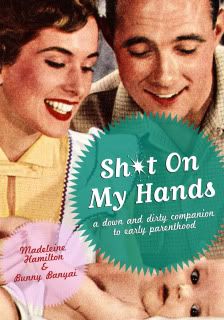
I can review something, however: a lovely friend gifted me a copy of the small in stature but big in larfs book Shit on My Hands, by Madeleine Hamilton and Bunny Banyai. It’s pocket (or handbag or nappybag) sized and it’s about those first few terrifying days, months and years after you pop out a sprog. And it’s not at all twee, not even in a retro way (though it does have some hilarious retro pictures with terrible of-its-time kid-based advertising that must have decimated the population in the 1930s.) It’s just funny. And accurate. And there are swear words in it. Which you need to read when you’re trying not to curse so much in front of your new offspring.
Some choice phrases that made me laugh out loud include: “After you become a parent the nightly news may as well be called ‘terrible things that could happen to your child’.” (Incidentally I now cry at almost any ad with a baby in it because hormones.) On pink: “The birth of a baby girl...[is] also likely to herald the arrival of so much pink paraphernalia it’ll look like a flamingo has thrown up in your hospital room.” (True, but then as I only bought her blue or green clothes at least she now has an assortment of colours.) On competitiveness between parents about who has slept the least: “ ‘Well, my baby woke every fifteen minutes. And she vomited all over her sheets. Then she rang the Department of Human Services to tell them I was an incompetent turkey, before registering herself for membership of the Fascist Youth League.’ ” Look, there’s a million more things that are probably funnier, but unless I take notes (which I do at movies, and if I’m paying attention with books I fold over page corners when interesting stuff happens, but don’t tell my primary school librarian that or she’ll throw chalk at me) I am not good at remembering things. Especially now that I no longer sleep in any normal sense of the word. But take my word for it: this book is funny, and probably would be even if you don’t have kids or even want them, because then you can laugh at the pain of others. And if that’s not what life is about, I don’t know what is.
 I give this book five out of five cute babies in hats, because I was in the mood for a laugh and I got one and anything more complicated than that can be saved for when I can walk properly again.
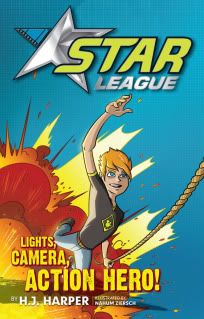
 There’s something about initials in kids books. When I was a kidlet, all the best books were by people hiding behind initials – along with Point Horror writers Caroline B Cooney and D E Athkins, R L Stine is of course a good example, and I was so in love with him and his initialled compatriots that for a while all of my (numerous and terrible) stories were mostly me thinking up dramatic titles, writing the name F E Hardy in bold, then running immediately out of ideas. The trend continues with the Zac Power books, written by H I Larry, a pen name for a variety of excellent authors who have contributed to the series. H J Harper is no pseudonym, but an actual (and quite lovely) person named Holly, and her new Star League series starts as much fun.
Book one opens with movie star Jay Casey heroically stopping some bank robbers in a commercial for the drink Fizz Force. As the filming wraps up, we learn more about Jay: he does his own stunts, swinging down from the ceiling and kicking a burglar’s legs out from underneath him; he’s kind, showing concern for the actors he’s just beaten up; and he’s a lonely kid, orphaned and with only his uncle/agent Jefferson as a friend. Then Jay finds out he’s up for an audition with the famous director Ben Beaumont—but it’s not an audition for a movie, but to join a new bunch of kids with the ability to save the world. There’s robot S.A.M., animancer Leigh, zombie Roger (full name Roger Romero, which is why I love Holly right there), werewolf Connor and ninja Asuka, and the first book shows the team meeting for the first time, and thrown right in the deep end with a dramatic kidnapping as the evil and awesomely named Professor Pestilence tries to use Jay’s fame to his advantage.
I like early reader chapter books because I can knock them out in a short period of time and feel like a Successful Bookseller. It’s also great when I like them and then have some proper advice to offer those who want to buy a book for the eightish-plusish market. (Younger kids will probably like having it read to them and older kids, like for example twenty-nine-year-old ones, might also like to snare themselves a copy.)
Having male, female and androgynous-robot characters means that all types of kids can see that anyone can be powerful and courageous, and makes the series good for kids who think reading about the opposite sex is gross/smelly/weird/boring or the parents that assume their kids think that way. Though to be honest, in many ways the children’s book industry mops the floor with adult books, sexism-wise, because there are female spies and agents and adventurers all over the place in the kids section but not as much in the adult fiction section. Hopefully kids who grow up reading books like Star League: Lights, Camera, Action Hero will end up writing books like Star League: Equal Pay, Equal Badassness. Or perhaps they’ll think of better titles. Probably.
Lights, Camera, Action Hero is fun, adventurous, a bit different, and manages to tackle the serious issues of being ostracised and feeling lonely while throwing in terrifying evil professors, killbots (my favourite kind of bot!) and jokes. Basically, it’s all you could want in a kids adventure book, with the added bonus of originality and warmth. Nahum Ziersch’s manga-ish illustrations are excellent, energetic, edgy and other e-words too: it makes for a good-looking read to go with the clear but not patronising language. And if you/your kid/your grandma likes it, there’s five more books in the series. You know what, you should probably just go buy them all at once.
 At work we just got in a stack of new titles from a company called Nobrow Press. I hadn’t heard of them before, because I am mostly wandering around in a forest of book-related information feeling lost and overwhelmed, but let me tell you internets, they make a damn attractive book. We made a display just for the collection, because they are visually appealing, and we all kept wandering over to sniff the glorious, fresh-and-well-bound-book smell and discreetly flick through them and then eventually just buy. Seriously, I don’t know why we even bothered to make a display, it’s half-empty already just from employees with no self-restraint.
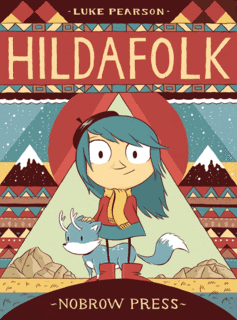
Anyway, the title I couldn’t resist was Hildafolk, by Luke Pearson. Nobrow has a graphic short story project called 17x23 and Hildafolk is one of the titles. It’s beautiful, and not very long, which is appealing to someone like me who has a short attention span. So I picked it up and took it home and read it and fell completely in love.
It’s hard to summarise something that has less words in it than the review I’ll end up writing (probably), but a young girl called Hilda lives with her mother, reads books on trolls, has an antlered-fox-type-companion-animal called Twig, and loves to draw and sleep in a tent when it rains. One morning, she goes out drawing, and, well, as she says at the end, “What a noteworthy day.” She learned a lesson about tolerance, made me do these alarming short barks of laughter, and then I sniffed the pages some more in a vaguely creepy manner and sighed at the end. It really is a perfect little story.
Luke Pearson’s big-eyed, stick-legged people and gorgeously coloured mountainous landscape are just the right level of cute and immersive. The snow and wind and Hilda’s fear of trolls are equally as clear and vibrant on the page, Pearson’s lines drawn as clear and smooth with the changing weather as they are with Hilda’s big, happy face. The terrain is familiar, but the critters within are not, trolls and giants as normal as snow and rain. Once I’d checked out other stuff on his site, I realised that his style, with clean lines like a Chris Ware tale but with movement (not to criticise Ware, who is amazing), if maybe Ware had an artistically-inclined baby with Charley Harper, is actually just my favourite style to look at. When it rains in Hilda’s tent, the PT PT PT of the downpour is evocative, and the earth-toned colours are so well-chosen that texture was rendered completely unnecessary. I mean, look, the whole thing has made me do entire sentences comprised entirely of fawning and without any terrible jokes. Surely that is something to be celebrated.
In summary: Exceeds Expectations, and about the most perfect way to spend ten minutes. It’s great, and you should read it. The only downside is the price here in Australia; while it’s a full-colour book with sturdy pages, it’s still only about twenty-four pages long and at twenty dollars, compared to around six dollars for a typical comic single issue, it’s a bit much. Still, it’s actually completely worth it, as both an art piece and as a comic, and you should all read it anyway and agree with me that the world created for Hilda should be the default setting for life. And then you should buy it. Or at least go and visit him over here, and tell him I sent you so he can be all, “What?”
 As someone who rarely reads books that are part of an ongoing series—apart from Jeff Kinney’s Wimpy Kid and Stephenie Meyer’s satirical Twilight series, I can’t think of anything since Harry Potter—making it to the sixth book in a row is a real effort and means that something must be right. While this is true—the Vampire Academy series is great fun—there is also a lot wrong with this book.
To rain down spoilers from the first five books in the series, Last Sacrifice opens with our heroine, Rose Hathaway, locked away in jail accused of the murder of Tatiana, queen of the Moroi. Rose and Tatiana didn’t particularly get along—Tatiana had recently passed a law lowering the age that guardians graduate and become fighters. As Rose is a guardian herself, trained to protect the Moroi—the good, consensual-bitey vampires—from Strigoi—the bad, murdery kind of vampire—she is not well pleased with the decision, but not enough to kill Tatiana. After a previous court outburst and some shifty bribing, Rose has been framed for the crime—but by who? As she is stuck in her cell, her friends and family do all they can to help her, from trying to find the real perpetrator to using a dramatic diversion to bust Rose out of the big house.
The Vampire Academy novels rely highly on throwing twists and shocks in every chapter, so I’ll try not to say much more. Suffice it to say the series relies heavily on action and drama, neither of which really can happen in a jail cell, so Rose is out and about breaking hearts and staking vicariously shortly into the book, making new friends and new enemies and smooching—well, who? Longtime readers will be either Team Dimitri (Rose’s first boyfriend, guardian trainer and someone who was turned Strigoi then brought back by Rose’s best friend, Lissa) or Team Adrian (when Dimitri became evil then broke up with Rose, in that order, Adrian was there to pick up the pieces and smoke heavily in the background.)
As Rose blusters her way around the countryside, her best friend Lissa, who brought Rose back to life during a car accident years before, is coping with her own dramas back at court, where she is thrown into much bigger turmoil than expected. The series is written through Rose’s dramatic, biased point of view, but due to her resurrection she shares a bond with Lissa that means she can see from the other girl’s point of view. Doing this means Rose is free to keep tabs on what’s happening in court even while getting up to more hasty crimes in the American backwoods.
It remains good, action-packed fun, sufficiently dramatic, a bit sexy (but not too much for the innocent eyes of teen readers—most dalliances get interrupted at inopportune times) and full of the characters you’ve enjoyed meeting in the past. Rose is flawed, has a quick temper, but is pretty funny and does what she thinks is best, which means she is mostly likeable.
But lord, sometimes you want to just stake her in the heart. Sometimes she is so stupid, or brash, or insensitive, that you really wonder if it would be so bad if she got executed for treason after all. Rose is a pain in the ass, and if it wasn’t for the fact that she is tall, fit, gorgeous, and could beat up anyone who looked at you funny, would she ever get as many marriage proposals and men willing to do anything for her? Her decisions are frequently annoying, and her reasoning behind the eventual relationship choice she makes feels very pasted on and does not compute with how the gentleman in question has appeared in the past.
The book could have done with a good dose of editing and the removal of one chapter ending early in the book that put my teeth on edge far too soon. The bond between Lissa and Rose has been a large part of the whole series, so when chapter two ends with Rose waking up, panicked, and the last lines being:
“What I found was...nothing.
The bond was gone.”
it’s serious business, you know? So when chapter three starts like this:
“Well, not gone exactly.
Muted.”
you feel like you’ve been cheated out of your emotions. I actually ended up marking a lot of pages in the book with scraps of paper if I came across questionable writing or plotting, but half of them fell out when I was flicking through just now to get to chapter two, so you might have to take my word on that. (One seemingly petty marked page found that someone knocked on Rose’s door in a “discrete” manner.) While I’m sure author Richelle Mead has had the series planned out in her head for some time, the eventual unveiling of who really killed Tatiana is actually kind of mean and annoying rather than a lightbulb moment where you think “of course!”. Some characters seem like red herrings, or just introduced to fawn over Rose, and some questions are still left unanswered. While the series will be continuing on with another Vampire Academy series forthcoming, one that won’t follow Rose—but apparently she will be around, so it won’t quite be the last we see of her—perhaps some of the loose ends will be tied up, but I don’t think I can be bothered reading any further now that this story has essentially reached its end point. I’ll just harass some poor teenage girl into reading them and telling me what happens to Rose in the future. “Does she get married? Does she have cute babies? Does she ever get the cute but inappropriate clothes she often finds herself wearing caught in any machinery and killed? TELL ME!!”
In summary: Below Expectations. I had hyped myself up into thinking the series was much more well-written than it is. It was still enjoyable enough, and with so many surprise moments it’s a page-turner, but I won’t read anything else by Mead because I am sick of all these improbably attractive people and their fantastical castle-related lifestyles. I really just don’t care any more.
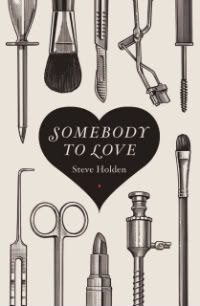
 On paper, Somebody to Love was My Kind of Book. I love reading about relationships and reality, about the everyday, but with something a little different to lift it. I loved The Lonely Polygamist because it was about relationships—one man and his four wives, which, of course, is a normal life for some people. And Somebody to Love was about a transsexual mortician in Tasmania; as I’m quietly a bit morbid, the mortician aspect appealed to me, as did the fact that I’d be reading about sex and gender issues that a lot of us could stand to know more about. And when I got my hands on a copy, I swooned at the cover: it’s a beautiful-looking book.
Our heroine, the mortician, is in her family’s funeral home, preparing three bodies for burial: the Esterhazen girl, the Kremmer boy, and Mr Phillips, a man who entrances her even in death. As she readies these cadavers for their final rest, she reflects on the life she’s led. From the family that taught her the trade to her journey to changing her body to reflect how she is, every cut and touch of makeup is the product of the years before her.
It really is an exercise in language. And like James Joyce’s similarly verbose Ulysses, it’s not really my bag. It’s a bit hypocritical for me to say so when the fiction I write is just as tangential and plotless as they come, which means I count a lot on my use of language, but I am possibly biased and clearly see myself as some kind of Fabulous Exception to the Rule. The mortician thinks in the kind of distinguished language that, if conversing in real life, would immediately put me on edge and feel I was being condescended to. One does not use the word “I” if “one” can be used to refer to oneself instead; indeed, the word indeed turns up at the start of a sentence so often I considered getting out a highlighter and counting, except I was worried my highlighter would run out of neon. Sure, the main character doesn’t have to be someone immediately likeable to be an interesting person to follow—like in A Confederacy of Dunces—but in this case, I found it far too frustrating. She is an unreliable narrator—seemingly paranoid of other people’s reactions to her, but without supplying enough information to know if she has a basis for it or not. Like so:
‘I see,’ she said, turning quickly, her eyes glinting, I believe, with malice. Mrs K, it is a known fact, is a vicious woman, sudden to anger, ready to wound, and in that moment she meant, undoubtedly, ‘I have your measure, I will punish you for this.’
(I do, however, feel I have met a kindred spirit in someone who like the comma as much as I do.)
In some cases, things were not explained enough; other subjects were banged on about repeatedly. It’s also something I wouldn’t recommend for anyone with a prudish constitution (necrophilia by page two—a new record!) and if you’ve recently experienced a bereavement, the graphic explanations will not make you feel better, though the care that the mortician puts into it is at least mildly comforting.
It is, in an understated but visceral way, one of the most violent and dark books I have read. Beauty is stripped to dark, and everyone within the book’s pages has their secrets—the funeral industry included. Some of the violence will happen with such smoothness, clouded by gorgeous words, that you will barely notice it happening. It has some beautiful moments of realised horror, delicately atmospheric and engaging. Every word, item and action is in its place. Some turns of phrase struck me as a bit odd, like the following:
There is, at the top end of the cemetery, a fence of trees laced with a passionfruit vine. It was a most welcome place to shelter on account of the warm afternoon, curtained by the fringe of fruit that hung grimly like testicles, hard and green, against the sunburned iron heat.
Now I understand her own male genitals were a source of concern for her, but testicles are not hard and green. If so, see your doctor. Just some advice from your friendly neighbourhood bookseller.
Frankly, the elegant language made it a difficult undertaking, and I had to reread sentences to try and understand what was happening; sometimes I just gave up and moved on. The plot jumped back and forth in time and often I had no idea where I was or at what point in the chronology of the story. It was kind of like when you’re stuck on a train next to the window, surrounded by a stack of third-year uni students who are loudly retelling the story of the Nihilist Party they threw on the weekend and trying their best to impress each other with their Word-of-the-Day-Calendar knowledge, but are all slightly too drunk to remember the order of events clearly.
There are a lot of books out there that have given me a similar reaction that have gone on to win ridiculously well-paying prizes and the accolades of millions. I’m the first to admit that just because I didn’t like something it doesn’t mean it’s not worthy, or that it won’t make your Top Ten Desert Island Reads. But this is not in mine.
In summary: Below Expectations. The past two books I’ve read by Tasmanian authors have been linguistically challenging for me (the other being Anna Dusk’s Inhuman) and I am now wary of crossing Bass Strait in case all the signs are in fancytalk or covered in werewolf blood.
 The world is full of great people. Sometimes when I watch the news I forget that, and when I’ve had a bad day with customers at work I think that everyone is out to be a bully. And then sometimes you meet someone like Anh Do, and they beam at you, shake your hand with enthusiasm and it’s all you can do not to hug them just because they’re ace. And then sometimes they write books, and their general good cheer falls off the pages and into your lap, and that’s why The Happiest Refugee is a great book and everyone should own it.
You may recognise Anh Do, Australian comedian extraordinaire, either from his standup or from stints on shows like Thank God You’re Here. He’s always there with a smile and ready to make you laugh. It’s basically impossible to keep a straight face around this man. With the release of his autobiography, The Happiest Refugee, he will make you laugh—but I found it wasn’t the continually hysterical book I was expecting. Not because Anh isn’t funny—he is—but because his life hasn’t necessarily always been the most wonderful.
At age two and a half, Anh travelled from Vietnam as a refugee with much of his extended family in an overcrowded boat. They were attacked by pirates—twice—and barely survived the trip that left them in Malaysia. When they were eventually sent to Australia, life remained difficult as Anh’s parents struggled with limited resources in every way but one—family. The strength of The Happiest Refugee for me lay in the fact that Anh’s story is such a universal and inspirational one, where determination and love was how this boy who almost died in the sea became so completely awesome.
Anh has this wonderful casual writing style that kind of makes you feel like you’re having a chat with a pal rather than reading a book. Without trying to sound insulting, it’s a simple and straightforward read, but that is also part of what makes it so entertaining. It’s relaxed and friendly. You probably by now get the hint that it’s cruisy and I liked it. Moving on.
There’s a lot to be heartbroken about in here. When Anh’s aunt is almost taken, naked and horrified, by the pirates. When his uncle’s dead body is found by the water in Vietnam. When his parents, such a strong and loving influence, split apart as his father leaves, and his mother has to struggle to raise her family on her own. When he finally is able to contact his father again, years later, only to find he is seriously unwell.
But within all this is such hope and wonder, and Anh’s family so wonderful and supportive, that it’s the kind of book that makes you want to go out and have a thousand kids because they’ll all end up as great as Anh and his siblings. Right? Right. Even his father, not a great example all the time, has his own heroism: saving his wife’s brothers from a concentration camp by borrowing a communist officer’s uniform and boldly walking into the camp and declaring that he needed to take those two men with him. It’s a moving story, and knowing the horrors of the life he led gives some insight into how Anh’s father may have reached a point of anguish where he thought there was nothing to do but leave. The sacrifices that Anh’s parents make for their families is truly something to behold.
One thing I loved about this was just how familiar the existence of the family was once they hit Australian shores. There was embarrassment—Anh’s brother Khoa had been given lovely lacy girl’s clothes by St Vincent de Paul’s kindly nuns—and there was the everyday life they led. From watching MacGyver, to keeping budgies (we had an aviary in our backyard), to wearing knockoff runners to school (I had a kid crawl under the table and yell out to the class that I was wearing Traxx shoes from Target instead of the pump-up Nikes everyone else was), it was great to just read about the early life of what was really many Australian kids and be reminded of my own. As an adult, Anh was a fantastic entrepreneur, coming up with countless fantastic moneymaking ideas, not least the idea of studying law. And just as he was applying for numerous, well-paying, fabulously corporate jobs, he had a better idea: to become a comedian. And thus we have Anh today, making us laugh on television and writing great books. But I’m sure he would have been a great lawyer. I can tell because I have proof that he is a very smart man.

Takes one to know one, I guess.
In summary: Exceeds Expectations. I’m going to recommend the hell out of this for Christmas presents, because it’s a hard book not to like.
 I like to be spooked. I’m really pretty cynical in reality—I’m an atheist, I’m not spiritual, and I don’t believe in ghosts. (The jury’s still out on aliens, but I don’t think they’re here, anyway.) But damn if I can’t leave all those feelings at the door when I’m watching a movie or reading a book, and scare myself silly waiting for monsters to jump out of my closet. I find demons and hauntings much more chilling than serial killers, maybe because I can properly disconnect from reality with them. I can happily squeal and turn the lights on halfway through movies and put books down and back slowly away from them. And so on. Which is why I like John Ajvide Lindqvist, who has so far written about vampires (Let the Right One In), zombies (Handling the Undead) and, now, with recent release Harbour, the chilling, supernatural power of the Swedish sea.
A young family—Anders, Cecilia and their daughter Maja—are on the Swedish island of Domarö for a winter holiday. They ski across the icebound snow to the lighthouse island of Gåvasten for a picnic. Thinking their daughter is safe with nothing but snow surrounding them, they let her out of their sight. And that is the last anyone sees of her.
Two years later, Anders returns to the island, bringing with him an alcohol addiction and, after the breakdown of his relationship, almost no hope. It is then that he realises some questions were never answered about Maja’s disappearance, and that other questions were never asked in the first place. And that perhaps the beautiful summer vacation island of Domarö is hiding an awful secret that threads through the community’s past and out into the sea itself.
Like just about everyone who saw it, I adored the Swedish film version of Let the Right One In, and it led me to read Lindqvist’s last novel, Handling the Undead. Harbour is a much better book. It follows the same desperation felt by an adult who loses a child that Handling had, where amongst other family stories a grandfather was desperate to hold onto the child who had just come back from the dead, but who was not in any way well (because he was, well, dead and underground for some time). But with Harbour, the isolation of the book’s setting was a great improvement. Instead of covering the lives of many and the dead people they are heartbroken to let go of, Harbour stays with Anders’ family and their inescapable history on Domarö.
Harbour is a haunting story, the kind that delivers genuine chills, immersion in the characters’ lives, and possibly a slight fear of the ocean. Seriously, don’t read this at the beach, unless you want to never go swimming again. (Team it with Jaws to really ruin your holiday.) The narrative dips into the past, a device that can sometimes make me angry that the plot is being deliberately forestalled, and ruin a novel’s flow but, in Harbour, it just pulls the reader deeper into the story and creates a full background for everything that happens.
And it is an exciting, unflinching, evocative story of how isolation can change the game plan. Like Stephen King on a good day, Lindqvist taps into the surreal but not to the point of the ridiculous; just enough to test your nerves. And win.
In summary: Above Expectations (because I didn’t really like Handling the Undead, even though I desperately wanted to.)
 While I’m mostly a sucker for a tearjearker—otherwise I’d never go see Pixar films—sometimes I just flat-out refuse to see things that I know are going to send me spiralling into weeks of hysteria, lamenting the death/lost love/actually happy ending of some fictional person/lion/robot or other. It’s why I’ve never seen/read Whale Rider, The Notebook, and, topically, The Boy in the Striped Pyjamas.
The Boy in the Striped Pyjamas author John Boyne has a shiny new release called Noah Barleywater Runs Away. Now, as I haven’t read Boy, I can’t do much in the way of comparing. But I do know that Boy was one of those books that worked for children and adults—that it was set in the world of children, but in a way that adults could understand it differently. Noah Barleywater Runs Away is, I feel, aimed more at children, though I’m a big proponent of Everyone Should Read Whatever The Hell They Want And No One Should Ever Make Them Feel Bad About It, so adults could (and undoubtedly will) read this too. Because while Noah has talking donkeys and magical doors, it also has a tinge of sadness that made me stop reading at one point on the train, lest I burst into tears and cause everyone to move into another carriage at speed.
Noah Barleywater is eight years old, and, upon reflection, doesn’t feel he’s done enough with his life. Sure, he came third in the 500 metres at Sports Day the year before, and he knows the capital of Portugal (it’s Lisbon), but it’s about time he really went out and achieved something. So he runs away from home early one morning to do so. And on the way he encounters many extraordinary places and people, as eight-year-olds are wont to do in books about running away (because a more realistic book would be something short like “he ran away and then hid in a bus stop until someone saw him, called the police and he was sent home.”)
More than a little influenced by the likes of Enid Blyton and glorious old fairytales, he meets a talking tree in the first village who pleads with him not to steal its apples; by the next village, shortly afterwards, Noah’s apple theft has made front-page news and he is considered a menace to society. Luckily for him, the third village is a lot more welcoming, and there he meets a kindly old toyshop owner, whittling away at a piece of wood and ready to share the story of his life with Noah. This old man was a runner so fast he’d be back from the edge of the city by the end of your sentence, and met the King and Queen, amongst other celebrities; but he was also a man filled with regrets. By sharing the story of his life, he causes Noah too to reflect on the real, heartbreaking reason why he’s run away from the family he loves so dearly.
Well I’ve made that sound all very serious, but I think it’s because of Noah’s straight and fairly dignified way of speaking (“Goodness!” he will say, unlike the sweary eight-year-olds I’ve encountered.) Noah does have a sense of humour, and the whole book is very entertaining, filled as it is with great adventures and talking animals and flashbacks of Noah’s recent, real-life adventures with his suddenly very animated mother. It’s definitely aimed at children—but, as it’s a secret little sequel to something much-loved by adults, anyone who likes to have a bit of fairytale fun when they read will have a ball. And then a bawl. (How do I not have a book contract yet with this startling wit?)Of note also is the fact that the cover is illustrated by the fabulous Oliver Jeffers, who not only wrote Lost and Found and  The Book-Eating Boy (amongst others), but is so visually cool that he recently appeared on The Sartorialist, looking dashing and upsetting people everywhere who don’t own blue shoes. I sent an email with a question to Oliver once, and he replied personally and in a friendly manner, so know that good people were involved in creating this work, and you should make a cup of cocoa, and curl up with a lovely little book. Except not until October, when it’s released. Sorry.
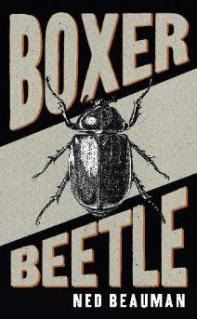
 Kevin Broom is a Nazi memorabilia collector and an awkward sufferer of trimethylaminuria, an illness that causes him to smell strongly of fish all of the time. Seth “Sinner” Roach is a pre-WWII Jewish boxer, short, nine-toed, alcoholic, and the best fighter in England. Philip Erskine is a collector of beetles, a devout follower of eugenics, and a bumbling and incompetent fascist who is mostly deplorable, except that you feel some mild pity for him for being a bit pathetic —and he wants to conduct tests on the one-of-a-kind Sinner.
As Kevin deals with an alarming beetle-related kidnapping in the present, he pieces together how Sinner and Erskine, seventy years before, have brought him to the point where a graceless shut-in like himself has to deal with a gun-wielding member of a long-dead Nazi society. The narrative runs smoothly from Kevin’s present-day machinations to the remarkably gritty past of Erskine and Sinner, and it surprised me completely as I generally avoid historical novels (it’s not something I’m proud of, but I am much more likely to read something set right this very moment than something pre-1990s, even though I grew up before that) yet I was much more excited reading their story than Kevin’s. Which isn’t to say that Kevin’s thread wasn’t interesting—of course it was, this whole book is great—but perhaps I learned a Valuable Lesson About Reading; i.e. that I should stop being fussy about stories set before the glory times of New Kids On The Block.
Ned Beauman manages to deal with the serious—anti-Semitism, eugenics, fascists—yet produce a smart book that manages to completely engage by virtue of its characters. From Sinner, small yet alarmingly intimidating even in paper form, and poor inept Philip Erskine, to foul-mouthed pre-teen fibber Millicent Bruiseland and sarcastic social darling Evelyn Erskine, everyone is wonderfully drawn and fantastically entertaining. Even London itself, and the buildings we visit, are as alive as the people, with Erskine’s family home Claramore a frightening place full of oversized appliances that may electrocute anyone unlucky enough to be existing nearby.
Boxer, Beetle is a brilliant, fun-in-a-dirty-way read by someone who has the nerve to be youthful and beardy and intelligent. It’s written in such an immediate, realistic style—despite the level of farce, Beauman doesn’t hold back on the stark violence of the era—that sometimes I had to remind myself in the 30s-set scenes that it was just a well-researched novel and not a well-told historical document. With jokes.
Boxer, Beetle will be published in September.
 Because the last thing I would do is lie to you, dear reader, I have to let you know that I actually work with Leanne, and I like her. She’s lovely, and funny, and always asks after my own writing. (Current status: OH GOD THIS SCENE IS BORING DELETE ENTIRE NOVEL INSTANTLY.) Still, if I hadn’t enjoyed her prize-winning young adult novel This is Shyness, I wouldn’t have written a review saying I liked it; I probably would have just kept quiet. Well, upon further reflection, seeing as I find it hard to shut up, I probably would have written a review, but it would have been quite short and said something like, “Wow, you should all read Leanne’s book, because the font is EXCELLENT and the spelling is SPOT ON. Hooray Leanne!”
Luckily for me, she won the Text Prize for this not just because she’s really nice in reality (ruining my illusions about being able to bribe publishers, alas) but because This is Shyness is legitimately, fabulously good. From the first chapter I was smiling happily to myself about all those lovely pages ahead that I knew I was going to enjoy. And I did.
Wildgirl is in the unnerving suburb of Shyness for the night, doing her best to get away from her problems—her disinterested mother, and the awful breed of monster known to some as the classmate—when she meets Wolfboy in a bar. Wolfboy is also shrouded in issues, but the two of them see each other across the room, and that’s it—they see in each other someone they want to know better, and they blow that popsicle stand and head out to a night filled with endless possibilities. And, in Shyness, it’s a night with no eventual dawn. Shyness is a place that has been abandoned by adults and the sun itself, where sugar is the currency and drug of choice, and somewhere Wildgirl wants to experience with someone who knows it well. And so together they navigate this odd place and its residents, from criminally-inclined under-12s after their filthy sucre, to mystical kebab makers and sinister doctors.
It’s a story that charts exactly the thrill of being a teenager; how life can become so awful that escape seems like the only option, but how hope and confidence can still be found in the face of the adversity that can come with youth. Wildgirl is overwhelmed in some situations and breezes through others; Wolfboy seems about the most physically attractive fictional character in the history of the novel (quiffs, tight jeans, swoon) but he is out of his depth in some situations. The two of them are the heart of the story; two fascinating and gorgeously real people in a world both strange and familiar, wading through life and sticky situations the best they know how. When Wildgirl jokes around you laugh with her; when Wolfboy hurts you feel for him. The other inhabitants of Shyness radiate personality, and the town itself feels like a dream but smacks of something real.
Sometimes, though I’m not yet thirty, all the sparky emotions I felt when I was a teenager seem very long ago. This is Shyness brings them all back, and while the idea of an endless adventure of a night made me a little unsure at first—all the endless nights I remember from being a teenager involve everyone getting drunk, a short bout of frenzied dancing followed by hours of Deep and Meaningful Conversations About Stuff And Things—what This is Shyness is really about, for me, is being able to find, even when everything seems impossible and hopeless, someone else out there who will hold your hand and simply be there.
I’m biased. But I loved it. And, much to my excitement, I knew about half the people on the acknowledgments page, though shockingly I was not on it. And I’d imagined the moment so clearly: “And most of all, thanks to Fiona, who I met after writing and editing this book, but who distracts me at work by yabbering on about nail polish and her own writing. This couldn’t have been done without you.”
 One of the lesser known problems that arose from the eruption of the unpronounceable Eyjafjallajökull volcano in Iceland earlier this year was the release delays for some books. Why they reported on the disruption of thousands of commuters in some little place called Europe instead I’ll never know. Front page news should have been: TRAGEDY! NEW SCANDINAVIAN CRIME BOOK DELAYED SLIGHTLY BY STORMS! Maybe the media was just being smart; there could have been riots.
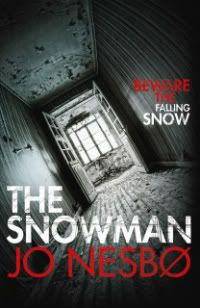
Sure, I’m kidding, but enough people were hanging on for Jo Nesbø’s latest that a not insignificant unrest could have occurred. These Nordic thrillers, they’re capturing the hearts of everyone, myself included. From Steig Larsson’s The Girl with the Dragon Tattoo and its two sequels to authors Henning Mankell, Camilla Lackberg and Jo Nesbø, the world can’t get enough of these dramatic and chilly tales. Blood dripping bright red against the snow. Bodies found frozen under ice, their faces contorted into expressions of horror. And in The Snowman, ominous snowmen built outside the homes of victims, draped in their scarves.
I loved The Snowman; this is the first book I’ve read by Nesbø and I now want desperately to read more. Inspector Harry Hole (I would be interested to know the correct pronunciation as I just read it in my Australian brain accent) is the hero of the book, a man with a drinking problem and a troubled past yet beyond the cliché that appears as and into reality. He has been put on the case of what could possibly be Norway’s first serial killer, someone who abducts women and then kills them in spectacularly bloodthirsty fashion. What these women have in common—if, in fact, they do—is what Hole aims to find out, along with who the killer is, and why Harry is beginning to feel he’s being followed.
He juggles his case along with his other problems: the cynicism of the men in charge who don’t particularly like him; his ex-girlfriend, the affable Rakel; Oleg, Rakel’s son, who by mutual agreement still hangs out with Harry; a new co-worker, the smart and tough Katrine Bratt who surprises at every turn. The character depth is wonderful, with involving snippets from just about everyone, even those just passing through, so that everyone feels beautifully fleshed out and you feel utterly invested in the story. The Snowman is full of red herrings and surprises, and just enough blood and gore to make it a thrilling crime novel without causing you throw up the two-minute noodles you ate for lunch.
It does suffer from a very twee and annoying literary quirk that I can’t say for sure is Nesbø or the translator’s work: it will repeat the last line of a section as the first sentence of the new section.
...He had come all the way back here and slaughtered a chicken. But why? A kind of voodoo ritual? A sudden inspirations? Rubbish, this killing machine stuck to the plan, followed the pattern.
There was a reason.
Why?
‘Why?’ Katrine asked.
Why? I also ask. This is amusing in small doses, but happens so often it become very forced and tiring, especially when the rest of the writing is just heavenly. The Snowman is the kind of book that reminds me why I adore crime—because I love to be surprised, I love to give little gasps of shock when I find out who the killer is, or what the connection is. I love it when they are set in a place I am unlikely to go and that is very cold and striking and where the women are less likely to be assessed on their dress because everyone is wearing heavy overcoats and mittens and their breath comes out in fog when they speak. And so on. I’ve never actually been to the snow so there is a chance I’ve romanticised it in my mind.
Apart from two loose ends that I found a bit frustrating, one of which may be saved for the sequel (and oh how I am waiting for the sequel, The Leopard, to get released here), The Snowman manages to be a book I seem to spend a lot of time complaining about but that I enjoyed so much it has revitalised an entire genre for me. If any more volcanoes erupt and spoil my reading fun, I’ll be right there with my “JUST SAY NO TO EYJAFJALLAJÖKULL” placard.
 I am a terrible cook. It’s okay, I’ve come to terms with it. I make the best toast, a mean avocado and tomato sandwich, and can put a teabag in a mug of hot water like I’ve been doing it all my life. But I’ve never made a good cake or fantastic cupcakes, or enraptured dinner guests with a meal. In short, I am no threat to your plan of winning Masterchef.
But I like cookbooks. Since I became vegetarian, then vegan, I’ve procured many more cookbooks and given away some of my now redundant ones. And I always look through them and imagine myself in the kitchen as some kind of zen chef, smiling at everything, using all stove hobs without crying and producing a meal that would render Gordon Ramsay speechless. As it is I would probably be wailing with hysteria halfway through a recipe and the oven mitt will be on fire. And that would just be for the accompanying salad.
When I woke up one morning to a copy of Yotam Ottolenghi’s Plenty from the gorgeous folk at Random House (literally, as the postman threw the package at the door and scared us all awake), I thought: this time will be different. Instead of flicking through, looking enviously at the recipes, then shelving it and going out for Indian food, I would actually do something completely out of character and cook something out of it. No! Cook many things. Because Plenty is just divine.
It’s the bestselling Ottolenghi author’s second cookbook: all vegetarian, lavishly photographed and with clear and helpful instructions. Right there was an immediate pleasure for me; I realised I could actually make these things. They weren’t ridiculously simple recipes and steps—1. Procure bread, 2. Plug toaster in, 3. Place bread horizontally in toaster, etc—but they were recipes that weren’t in all my other cookbooks yet did not terrify me. Ottolenghi’s notes on the top of each recipe and relaxed but concise explanations appeased me into a nice mellow feeling of I can do this. And so I went out to the shops. And after a hasty consult with my iPhone to see what shallots were and a small anxiety attack at the price of saffron, I bought my ingredients for the recipes I’d eyed up and went home.
Attempt one was the quinoa and grilled sourdough salad on page 128, which looked fresh and healthy and relatively simple. I’d always avoided quinoa in the past, substituting couscous if a recipe called for it, but this time I went out and found some. Now I am thinking about substituting quinoa for couscous in everything from now on because it’s a sweet little grain, amusingly shaped, easier to cook that I’d imagined and, importantly, scrumptious. In fact, the entire meal was an absolute success, hungrily gulped down by me and Chris, and I even made enough to take to work for lunch the next day, where all my co-workers were peeking into my Tupperware to see what it was and making appreciative noises. It was straightforward and very tasty, a new version, as Ottolenghi says, of the Arabian fattoush. It was also a lesson in paying attention to recipes—I made too much bread for the croutons, which was astonishing as my general kitchen rule is There Can Never Be Too Much Bread. In this case, there was. In the past I may have covered up average meals by overdoing the bread, but maybe it’s not always necessary! I’m planning on making this at the next barbecue or party, because it really was spectacular.
Attempt two was made a little later, after I had mostly recovered from a cold that had killed my sense of taste and left me looking pathetically in the fridge as the parsley I bought started to go all floppy and the mint a bit brown. Finally, I had enough feeling in my tongue to have a go at page 260, saffron tagliatelle with spiced butter. I cheated a little here, as I didn’t make the pasta as per his suggestion (he does point out you can use normal pasta, just to boil it with some threads of saffron, which I did) and used margarine instead of butter, which is probably a terrible food crime but didn’t bother me. This went a little less successfully because I burned the scallions I was cooking in the butter, but I can’t blame poor Yotam for this. I also left out the pine nuts (because I forgot them) and feel they would have been a beautiful crunchy addition to an otherwise silky dish. My own inadequacies aside, the mix of spices were just heavenly and with the addition of parsley and mint, the dish sprang into something absolutely beautiful. Managing to still be tasty even with burned bits of onion all over the dish is a pretty impressive accomplishment and again, the method didn’t scare me off. I’ll absolutely try this again, possibly with a few modifications like, I don’t know, the correct ingredients and a better attention span.
Plenty is a super cookbook. To my vegan pals: this is heavy on the eggs and cheese, though plenty (o I am hilarious) of it is adaptable. It’s a lovely-looking and very encouraging addition to any kitchen bookshelf, and I now recommend it. And after having it by my side for reference for this, I’ve just made myself hungry again.
 With Puffin Books turning seventy this year, the publishing company has released a bunch of “Pocket Money Puffins”, selling in Australia for the lovely little price of $7.95. They’re compact things, by well known authors, with Infinity coming it at less than a hundred pages but—and I only noticed this after I’d bought it—only thirty of those pages are Sarah Dessen’s short story, with the rest of the book being extracts from her novels Just Listen and That Summer.
I’ve heard a lot of good things about Sarah Dessen, and love reading her blog because she seems just so darn friendly and entertaining no matter what she’s talking about. Because I am convinced that I am a Tremendously Busy Person, I thought a short story was a good introduction to her writing. Unfortunately this wasn’t the case.
Infinity is the tale of a teenager on the cusp of just about everything—growing up, getting her drivers’ licence, going all the way with her boyfriend. She is as hesitant about negotiating the awkward roundabout in town as she is about having sex with Anthony, who comes across right away as one of those total jerks who whine and moan about having sex so much they must feel making someone feel shitty about what they do with their virginity is a massive turn-on. While it’s probably a good example of Dessen’s style, which is to write realistic books about realistic issues—and an unfortunately common one at that—it was far too short for me and didn’t have enough of the main character’s life to get a feel for what else was going on for her. The story isn’t even original to the Pocket Money Puffin series, being published previously in a collection called Sixteen, which would have suited it better—and it shows. Having said that, reading the excerpts from the other novels truly made me want to go out and buy them, because Dessen’s talent seems to lie in constructing a much larger world for her characters. The only problem I have here is that I feel it was too expensive for such a short story, where more than half the book was basically advertising; the royalties don’t even go to charity. The book should have been free, or at least less than five dollars, if most of it was teasers.
In conclusion: buy other Sarah Dessen novels, but don’t bother with this. For an extra two dollars you could just buy one of those glorious Popular Penguins instead, like Meg Rosoff’s fantastic How We Live Now. Or you could donate your $7.95 to the Fiona Needs Money To Justify Buying Friday Night Lights on DVD Fund. I know what I’d choose. (Buy both, then ice cream.)
 I’m all about investment. Not the financial kind, despite the fact that The Passage is, at 766 pages, value for money, (*cough*and at the special price of $29.95 here*cough*) but character investment—where the people you’re reading about become important to you, their hopes and dreams something you are utterly involved in. And with this, the first in a now eagerly-anticipated trilogy, I was totally and utterly invested. I was trying to create extra hours in the day where I could read it: balancing it precariously on my knees while I was picking the sultanas out of my muesli, bringing easier lunches to work so I’d have less sandwich-building to do that ate into my reading time, and experiencing excitement instead of dread at the idea of catching public transport.
It’s a tale of journeys, starting with Professor Jonas Lear deep in Bolivia trying to find the rumoured cure for illnesses and old age. When he does, in a bloody and alarming fashion, it starts a new quest—one for people to act as guinea pigs to see if what was found with the horror in Bolivia can be turned into something viable for the human race. Brad Wolgast, devastated at the loss of his daughter and the separation from his wife, is a member of the FBI and sent out to recruit people, those with no hope for the future and no ties to the past: criminals on death row. When the virus works—but not as expected—they need someone younger, a child. When Wolgast is asked to collect a girl called Amy, abandoned by her mother at a nunnery, his conscience gets the better of him. But with the secluded government lab slowly losing control and the infected amassing power, he is running out of time.
Nearly a hundred years later, the world has become very small for one group of people. Peter Jaxon is waiting at the walls of his fortress home to kill the brother he loves, the brother who has been taken by the virals—the monsters the criminals became and turned others into. Virals will always come home, and so Peter waits for his brother, while the village he has lived in all his life starts to disintegrate as time and doubt get the better of them. Someone is certainly coming for Peter, but it is not his brother. For Peter, his journey is just beginning.
While vampires seem a little overdone now after so much media attention, this is an excellent representation of the horror genre. They are only vampires in a loose sense, as while they don’t particularly like sunlight, are strong and resilient and do like to consume people, they don’t sleep in coffins, you can’t have a dignified conversation with them and you can’t keep them out of your home simply by not giving them permission to come in. These monsters aren’t sparkling or cuddly—they are horrific creatures and managed to instil genuine thrills of terror into this cynical reviewer. The book is a nail-gnawing narrative of excitement as Wolgast evaluates his options and Peter discovers a world even more large and terrifying than the one he already knows.
Justin Cronin has rendered a simply amazing new world, from Wolgast’s near future (Where Dubya’s daughter Jenna Bush is, terrifyingly, governor of Texas) to Peter’s insular world, full of altered vernacular and a way of living that never leaves the four walls of the compound and is geared solely towards the inhabitants’ survival. The landscape is ravaged by the passing of time and toothy bad guys, and the world is utterly convincing.
I started The Passage apprehensive at the length, and finished it wailing with anger that it wasn’t three times the size. Not unlike Stephen King’s beautifully constructed epic stories like The Stand, I could have lost myself in Cronin’s written words forever. The characters are real and immediate, the story detailed and elaborate without being confusing, the language clear but not simplistic. I can barely wait for the sequels, and just to get more, I’m even open-minded about the Ridley Scott movie on the horizon. Run to get your copy of The Passage like there’s a convicted and infected felon on your tail. It’s simply that good.
 If you haven’t read the first four books in this series, then I must say: Warning, warning! Endless spoilers ahead! This action-packed supernatural series for teens has so much stuff going on that you’ll regret perusing this post ahead if you’ve ever considered reading it.
I’ve read a few supernatural kids’ books lately, mostly because it’s a large portion of the teen market at the moment. Of course we can blame Stephenie Meyer for this (amongst other things) for showing that writing about vampires as a metaphor for teen sexual angst can make you wealthy at an almost cartoonish level. Many authors have now been able to publish their supernatural books and they are very hit and miss. Of the new deluge of books, I’ve read some terrible ones, and some okay ones. Being that it’s not my favourite genre (though what is may be still up for debate) none of them have really been angels-trumpeting awesome, but as far as pure enjoyment goes, Richelle Mead’s Vampire Academy series is the best I’ve read.
Vampire Academy is the nickname for St Vladmir’s, a school for Moroi (vampires, but good guys) and dhampirs (humans with a Moroi parent, who are on this earth to guard Moroi.) The Moroi get a standard education, while the dhampirs get both a normal education and then guardian training as well, because they will only ever graduate to fight for the Moroi. Who are they guarding against? That would be the Strigoi: vampires who have killed another person, or someone who has been forcibly turned by another Strigoi. Rose, our protagonist, is a sexy ass-kicking dhampir, who is happy being a guardian for her best pal, the Moroi Lissa, but also wants to get out there and beat down some Strigoi. Things become complicated when her trainer, Dimitri, who is so irresistible that even readers want to smooch him, finally caves in to a relationship with Rose, boffs her in a shed, and then is promptly turned Strigoi three pages later. That all took three books to happen, and book four was spent with Rose tracking him down to Siberia, where he kidnapped her and tried to convince her to turn Strigoi so they could go on murderous sexy rampages for eternity. She declined and smacked him down, but had learned that maybe, just maybe, there was a way to turn Strigoi back into who they were.
Spirit Bound finds Rose and Lissa after graduation from St Vlad’s, at the Moroi court, waiting to find what will happen with the next stage of their lives. Now is the time when the guardians are doled out to the Moroi, and while Rose always wanted to be with Lissa, she may not be able due to skipping school to head to Siberia for a few months the year before along with the endless dramas she gets caught up in, and because Lissa is a princess—and the last of her line—they need someone stable to guard her. So now Rose needs to show that she is a good influence, but because she’s the kind of person who will throw herself into ideas with abandon, she takes off, with Lissa and another guardian, to bust someone out of prison who could possibly help Dimitri. And I can’t really say more, because there are so many dramatic twists thrown in I’ll surely ruin something.
Vampire Academy is not a perfect series. It suffers from the overblown chapter endings I hate, where authors seem to feel the only way to get people to continue reading is to end a chapter with someone making a dramatic proclamation that leaves everyone reeling. To Richelle Mead’s credit, she’s not as bad as James Patterson, who does the same thing but has literally more than a hundred chapters per book that all end like that—Mead does rein that in, to about twenty-seven chapters. The writing can be a bit standard and clichéd, and there is a fair amount of brooding about boys. But it is much less painful than Twilight, mostly because Rose is a much better female protagonist, who doesn’t just sit around waiting for boys to be violent towards her and each other (because that’s what they all do, right?) but jumps into the fray, is loyal to her friends, has a finely tuned sense of right and wrong, and makes it her life’s work to fight for what is just. She’s much more realistic, in that she sometimes jumps to conclusions, gets angry or jealous, and gets into petty fights when she’s in a bad mood. She’s sixteen at the start of the books, and teenager or not, that’s how people are. Fallible humans. She’s also up for parties, loves pashing boys, and doesn’t have to worry about the poor helpless mens unable to stop themselves hurting her during sex. She lives in a fantasy world, but the reactions of the people around her make it seem much more grounded in reality than other books. It’s also fun—some of these books are so depressing I can’t figure out the point of trying to save the world when everyone is so annoying—and Rose’s sense of humour sustains her and the reader throughout hard times. And this book, above all others, really slaps her with some hard times.
There are a lot of characters that dash in and out of the books. Some are frontline characters during the first half of the book and then vanish from thought by the end of it. It can be hard to keep up with who’s who, though Richelle Mead will explain who every character is—there’s just a lot of them, and it’s difficult to remember why Rose likes or hates them. (She doesn’t really do neutral.) Despite that, Spirit Bound, and the whole Vampire Academy series, is a rollicking, enjoyable read that covers some familiar ground, makes for some interesting new drama, and is a much better example for the Youth Of Today than Twilight. The final book’s out at the end of the year, and while I’ll pretend to be mature and indifferent, secretly I can’t wait.
 Confronted with the looming reality of his death, George Washington Crosby lies in the middle of his living room, on a rented hospital bed, surrounded by his family. With the medication taking hold and his body failing him, time becomes a loose construct and the life he has lived—as well as the life of his father before him—become as immediate as reality.
In the unforgiving landscape of rural late-eighteenth to early-nineteenth-century Northern America, Howard Crosby sells goods, his mule pulling a cart full of life’s necessities; pins, coffee, tobacco. In a place where winter brings no income because his neighbours become reclusive and hunker down for it, it is a difficult living, his own violent epileptic seizures sometimes hindering his route. Howard’s observations of the landscape around him make for incredible reading; eloquent and as convincing as if Paul Harding was there seeing it for himself, and looking remarkably young now for someone pushing a hundred and fifty. Later, Howard’s son George will tinker with clocks, his relationship with his father and time always close at hand. Interspersed with beautiful meditations on Latin phrases and notations on the workings and history of clocks, to whittle it down to a story of a man and his father is to miss the beauty of this novel, which is the writing itself. Harding’s Pulitzer Prize winning novel is an original, captivating book that deserves its accolades.
One of the most astounding aspects of this book was the relationships between fathers and sons, not only between George and Howard, but between Howard and his own mentally declining father. Generally, when you read books or see movies set in such a time and place, guidance usually involves a whupping, or a disowning, or getting killed with your daddy’s shotgun, or perhaps all three, as the mother stands by feeling sad but unable to convey her emotions because of the general fear surrounding The Patriarch. In this, the fathers suffered from illnesses, but were good men, kind to their families and only wanting the best for their children. Until this book (admittedly not a true story) I had assumed that Nice Dads only appeared when beating your children started to seem more like picking on those unable to fight back, which didn’t seem to happen until the late twentieth century (and still hasn’t seeped into everyday consciousness, alas.) Possibly a meditation on how only men considered weak were able to show their children tenderness and affection, it was truly touching.
I was originally going to say that the one flaw of the book was that it was so mired in Harding’s elaborate language that I sometimes got a little overwhelmed by what was possibly hallucination, possibly symbolism, likely both, and kind of skipped over it. I’m usually in a hurry to get to the end of the book, where they all live happily ever after or die in a big explosion or what have you, so I don’t give some writing the time it deserves. I feel that the best books are those that work on two levels: a good, entertaining read for those like me who find speed reading a competition with no other competitors, and something with depth and beard-stroking metaphors for those who enjoy a ponder, or for me to think about later. I thought it possibly failed on the first front, because the hallucinatory nature of the language meant I got impatient very quickly with what was happening. Having said that, without even trying I’ve written about what I interpreted it saying about fathers, and he might have meant nothing by it. But it got me thinking and pretending to be analytical, didn’t it? So instead I’ll say the flaw of this particular edition was that I found at least three typos. And now I’m off to do my duty and type up my letter explaining why that is enough to strip Harding of his Pulitzer and give it to Jeff Kinney for the newest Diary of a Wimpy Kid book.
 What a title, huh? Makes you think to yourself, “A lonely polygamist? I call shenanigans!” But here we have it: forty-five year old Golden Richards, husband to four wives and twenty-eight children, alone with his emotions amongst his enormous, distracted family, spread over his three homes and his construction business, working out of town building something he has not been entirely honest about. He is still battling with the grief of losing his beloved daughter, Glory, and is now facing an entirely unexpected set of circumstances: not-so-holy emotions towards his boss’ wife.
I adore a good dysfunctional family drama, and having the family be of this scale made me almost delirious with anticipation. Luckily, Udall did not disappoint, and The Lonely Polygamist is excellent; the book as vast in size as the family therein, but you’ll still finish it wanting more of the Richards clan. There are Golden’s wives: terrifying “witchy-woman” Beverly; the ever laughing Nola; Rose-of-Sharon, who deals with the noise and clamour of the family by wearing earmuffs and teetering on the edge of a nervous breakdown; and the most recent wife, Trish, young and beautiful and bewildered by her circumstances. Then there are the children, from ages seventeen to three, neatly listed in a family tree in the front of the book, and spoken as a mantra by Golden so he can remember them: Em, Nephi, Helaman, Josephine, Naomi, Pauline, Novella, Parley, Sybil, Deeanne, Gale, Alvin, Rusty, Clifton, Glory, Herschel, Martin, Boo, Wayne, Faye, Teague, Louise, Fig Newton, Darling, Sariah, Jame-o, Ferris, Pet. Udall, like Golden, does not have time to fully get to know each child, but we can feel them in the book, a roaring wave of siblings all clamouring for attention from their father and mothers.
Surprisingly for a book about Mormon families following a fundamentalist philosophy, there is very little of God in the book. For our main characters, Golden, Trish, and Rusty (son #5, and otherwise known as “The Family Terrorist”), their lifestyles weren’t something they came to by fervent religion but by accident or birth: Golden finds that the father that ran away during his youth has joined the church, and stays rather than return to his angry mother; Trish is running with her daughter from her old husband and craves the life of her childhood, with family members spilling out of every room; Rusty is born into this life, and, at eleven, doesn’t have much choice, despite being desperate to escape.
In Rusty’s sneaky journeys away from his overwhelming family, he meets June Haymaker, twenty-seven, maker of explosives and fireworks and builder of his own bomb shelter. And in Golden’s clandestine new job, he meets his untrustworthy boss, the unstable Ted Leo. June and Ted unwittingly change the life of the Richards clan and send this oversized and fantastic book into dangerous territory.
It’s difficult to condense this book into a short explanation. Golden abandons his family for his new interstate job and stays there in his trailer hiding from the world; he can’t even pretend to deal with his wives and children anymore; he is contemplating an affair. Even so, he remains somehow endearing, enormous and goofy, helpless in the face of all the stronger personalities around him. Trish lives with her only biological daughter, Faye, in a duplex away from the rest of the family, and waits impatiently for the time she has allocated with her husband, which he inevitably won’t turn up for. Rusty channels Holden Caulfield, his portions of the book told from the point of view of an angry and neglected mid-seventies child: he is in a frenzy of sexual tension, aimed mostly at his beloved mother-aunt Trish; he says What a gyp! as much as Holden spouts off about phoneys. He invents a new life for himself for June, calling himself Lance and keeping quiet about his, ahem, different lifestyle. He wishes desperately for his mother, Rose-of-Sharon, to get past her mental illness and show him some affection. Your heart will ache for all of them as they cope poorly with their lives, living on small shreds of hope: that they will be able to make the right decision; that they will be able to spend time with their husband; that they will be loved.
With an ominous backdrop of nuclear explosions in the Nevada desert, The Lonely Polygamist is really just a fantastic read; I enjoyed it more than I can express. I am waiting, despite all logic, for the twenty-seven sequels that delve into the lives of each child. Why is Ferris so intent on nuding up all the time? Why does Jame-o have such a helpless love for the Hoover, which he takes everywhere with them? I would gladly read six hundred pages on every single child if Brady Udall was the one wielding the pen. Don’t let the size of the book overwhelm you like it almost did to me; I’m going to be annoying everyone I know (or don’t) into reading it, and if we’re on a present-giving basis with each other, don’t be surprised to find it on your doorstep for your next birthday.
 Rose Tremain’s new novel, Trespass, is not an upbeat tale. However, it revels in the joy of being alive; the beauty of nature, land, and your own space in the world, until someone dares to trespass upon it. It is also the kind of novel that is serious and makes it hard for me to crack jokes.
For one-time antiques and art superstar Anthony Verey, time is the culprit. Once envied by all of London, he has aged, and the sales of his antique wares are few and far between. He lives trapped in a perfect past where he was adored by beautiful young men and women alike, and where he could create a flawless space that he now wants to try recreating again. His sister, V, lives in the south of France with her partner Kitty, the two of them working on their garden and creating a flourishing landscaping business. Kitty loves the home they have made for themselves, and does not want anyone—least of all Veronica’s condescending brother, Anthony—to impose upon it. Nearby in France, Audrun lives in a bungalow on the edge of the land that once belonged to her family and is now owned by her despised and unhinged brother, Aramon. Aramon is feeling the pull of old age and wants to sell the property, the kind of glorious French home that foreigners so desperately want to own, and live a smaller, cleaner life. His sister is devastated at the idea of losing her beloved home, especially to her horrendous sibling. And as a lonely little girl trips her way along a lush wood path, she sees in the adjoining river a body, but whose?
Books set in France can often suffer from trying too hard to appeal to Francophiles with descriptions of a flawless landscape filled with endearing characters; they can feel like thinly veiled French tourism board propaganda. In Trespass, I felt none of this. France was a character in the book, but just as beautiful, dark and complicated as anyone else, and never overwhelming the human characters in the book. It even showed a neat little concern about foreigners buying property in rural France and making it impossible for young locals to move into homes their own towns. I was utterly pleased by this, I’ve never been particularly interested in France myself, probably because I was terrible at French for the few years I studied it in high school (and in the first year it was an elective subject, there were mostly girls in the class, which completely defeated the purpose for me even being at school at the time, which was: stare at boys and sigh.)
Trespass is an evocative story about time, regrets, and letting go of the past. The characters are flawed but realistic, human and aware of their own luck and misery. Trespass is the kind of book which will have you reaching towards Rose Tremain’s earlier novels, wondering what other worlds she can create.
 When I first started this blog, I assumed I’d be writing only about books. After all, books are what I know and sell. Turns out what I apparently most like to talk about, however, are movies, but now that I’ve given myself a stern talking-to regarding cinema prices I will have to limit them. Or, so I tell myself until next Friday when I start to get a hankering for a Frozen Coke and a sweaty ticket box queue. I have read books, but they’ve mostly been okay, not really good enough to get into a flap about or terrible enough for me to enjoy getting my teeth into. Until now, when—as always—it’s a children’s book that reminds me just how excellent those papery things what have words in them can be.
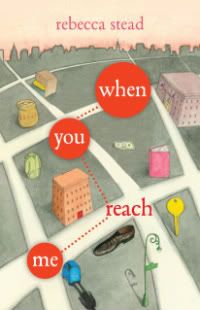
I sat down to read the start of Rebecca Stead’s novel over lunch last Monday (rye bread toast with avocado, tomato, salt and pepper, because I know you’re interested) and put it down briefly when I decided I should do some real work, then decided instead that I should just maybe read a little bit more of the book and snack on some bagel crisps. Well, the crisps were disgusting (damn you Burns & Ricker) but the book made me forget them completely, and I finished it in one fascinated sitting. When You Reach Me tells the story of twelve-year-old Miranda, in sixth grade at a New York City school in 1978. She and her mother live together in an apartment above her oldest friend Sal and his mother Louisa; Miranda’s mother has a great boyfriend called Richard; everything is going fine. Then one day, as they’re walking home from school together, Sal is confronted by another kid and punched squarely in the stomach and the face. Miranda helps him home and is worried, but the incident changes their friendship and Sal will not talk to Miranda. While Miranda tries to figure out why this is happening, and gains some new pals in the ethereal Annemarie and smartass Colin, another, more unexpected storyline is building up—one involving notes left for Miranda with predictions that can only mean one thing. And that is time travel.
I first heard of this book from a co-worker who was explaining it to myself and a customer. It sounded great and she clearly enjoyed reading it, but the time travel aspect threw me off a little. I spent all of high school paying attention in English and reserving all of my staring-moodily-out-of-the-window for science classes, so while I know they didn’t teach time travel in Science (at least not at my high school) I always feel a little out of my depth reading science fiction, even that aimed at people I am old enough to parent. But When You Reach Me handled all discussions of time travel with such a perfect touch that it explained the necessary concepts clearly without ever sounding patronising, bar snippy character Julia who tries, along with wise Marcus, to explain it to a baffled Miranda, but eventually stomps off saying, “I’m glad someone here has a brain.” The time travel is both an important part of the story but it never threatens to overwhelm the reality of being a kid in a world where relationships are difficult, and that is why it is so great. Mira loves her mother but is embarrassed by their home in comparison to her friends’ apartments; she begins to fall in love; she fights with her new pals. She also learns a lot and even when she is angry or in the wrong, she is still a perfectly human heroine who has a good heart. While I haven’t been twelve for a while, reading it took me right back to what conversations and relationships were like when I was the same age. Life could be funny and upsetting and comforting and awful and the most exciting thing in the world. When You Reach Me is a beautiful, funny, read that doesn’t sugarcoat reality, making it more than accessible for older or adult readers while still being wonderful for the upper-primary age group it depicts.