I am a terrible cook. It’s okay, I’ve come to terms with it. I make the best toast, a mean avocado and tomato sandwich, and can put a teabag in a mug of hot water like I’ve been doing it all my life. But I’ve never made a good cake or fantastic cupcakes, or enraptured dinner guests with a meal. In short, I am no threat to your plan of winning Masterchef.
But I like cookbooks. Since I became vegetarian, then vegan, I’ve procured many more cookbooks and given away some of my now redundant ones. And I always look through them and imagine myself in the kitchen as some kind of zen chef, smiling at everything, using all stove hobs without crying and producing a meal that would render Gordon Ramsay speechless. As it is I would probably be wailing with hysteria halfway through a recipe and the oven mitt will be on fire. And that would just be for the accompanying salad.
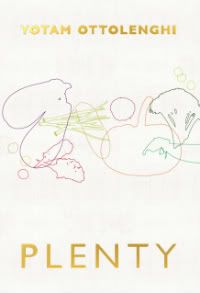
When I woke up one morning to a copy of Yotam Ottolenghi’s Plenty from the gorgeous folk at Random House (literally, as the postman threw the package at the door and scared us all awake), I thought: this time will be different. Instead of flicking through, looking enviously at the recipes, then shelving it and going out for Indian food, I would actually do something completely out of character and cook something out of it. No! Cook many things. Because Plenty is just divine.
It’s the bestselling Ottolenghi author’s second cookbook: all vegetarian, lavishly photographed and with clear and helpful instructions. Right there was an immediate pleasure for me; I realised I could actually make these things. They weren’t ridiculously simple recipes and steps—1. Procure bread, 2. Plug toaster in, 3. Place bread horizontally in toaster, etc—but they were recipes that weren’t in all my other cookbooks yet did not terrify me. Ottolenghi’s notes on the top of each recipe and relaxed but concise explanations appeased me into a nice mellow feeling of I can do this. And so I went out to the shops. And after a hasty consult with my iPhone to see what shallots were and a small anxiety attack at the price of saffron, I bought my ingredients for the recipes I’d eyed up and went home.
Attempt one was the quinoa and grilled sourdough salad on page 128, which looked fresh and healthy and relatively simple. I’d always avoided quinoa in the past, substituting couscous if a recipe called for it, but this time I went out and found some. Now I am thinking about substituting quinoa for couscous in everything from now on because it’s a sweet little grain, amusingly shaped, easier to cook that I’d imagined and, importantly, scrumptious. In fact, the entire meal was an absolute success, hungrily gulped down by me and Chris, and I even made enough to take to work for lunch the next day, where all my co-workers were peeking into my Tupperware to see what it was and making appreciative noises. It was straightforward and very tasty, a new version, as Ottolenghi says, of the Arabian fattoush. It was also a lesson in paying attention to recipes—I made too much bread for the croutons, which was astonishing as my general kitchen rule is There Can Never Be Too Much Bread. In this case, there was. In the past I may have covered up average meals by overdoing the bread, but maybe it’s not always necessary! I’m planning on making this at the next barbecue or party, because it really was spectacular.
Attempt two was made a little later, after I had mostly recovered from a cold that had killed my sense of taste and left me looking pathetically in the fridge as the parsley I bought started to go all floppy and the mint a bit brown. Finally, I had enough feeling in my tongue to have a go at page 260, saffron tagliatelle with spiced butter. I cheated a little here, as I didn’t make the pasta as per his suggestion (he does point out you can use normal pasta, just to boil it with some threads of saffron, which I did) and used margarine instead of butter, which is probably a terrible food crime but didn’t bother me. This went a little less successfully because I burned the scallions I was cooking in the butter, but I can’t blame poor Yotam for this. I also left out the pine nuts (because I forgot them) and feel they would have been a beautiful crunchy addition to an otherwise silky dish. My own inadequacies aside, the mix of spices were just heavenly and with the addition of parsley and mint, the dish sprang into something absolutely beautiful. Managing to still be tasty even with burned bits of onion all over the dish is a pretty impressive accomplishment and again, the method didn’t scare me off. I’ll absolutely try this again, possibly with a few modifications like, I don’t know, the correct ingredients and a better attention span.
Plenty is a super cookbook. To my vegan pals: this is heavy on the eggs and cheese, though plenty (o I am hilarious) of it is adaptable. It’s a lovely-looking and very encouraging addition to any kitchen bookshelf, and I now recommend it. And after having it by my side for reference for this, I’ve just made myself hungry again.
 With Puffin Books turning seventy this year, the publishing company has released a bunch of “Pocket Money Puffins”, selling in Australia for the lovely little price of $7.95. They’re compact things, by well known authors, with Infinity coming it at less than a hundred pages but—and I only noticed this after I’d bought it—only thirty of those pages are Sarah Dessen’s short story, with the rest of the book being extracts from her novels Just Listen and That Summer.
I’ve heard a lot of good things about Sarah Dessen, and love reading her blog because she seems just so darn friendly and entertaining no matter what she’s talking about. Because I am convinced that I am a Tremendously Busy Person, I thought a short story was a good introduction to her writing. Unfortunately this wasn’t the case.
Infinity is the tale of a teenager on the cusp of just about everything—growing up, getting her drivers’ licence, going all the way with her boyfriend. She is as hesitant about negotiating the awkward roundabout in town as she is about having sex with Anthony, who comes across right away as one of those total jerks who whine and moan about having sex so much they must feel making someone feel shitty about what they do with their virginity is a massive turn-on. While it’s probably a good example of Dessen’s style, which is to write realistic books about realistic issues—and an unfortunately common one at that—it was far too short for me and didn’t have enough of the main character’s life to get a feel for what else was going on for her. The story isn’t even original to the Pocket Money Puffin series, being published previously in a collection called Sixteen, which would have suited it better—and it shows. Having said that, reading the excerpts from the other novels truly made me want to go out and buy them, because Dessen’s talent seems to lie in constructing a much larger world for her characters. The only problem I have here is that I feel it was too expensive for such a short story, where more than half the book was basically advertising; the royalties don’t even go to charity. The book should have been free, or at least less than five dollars, if most of it was teasers.
In conclusion: buy other Sarah Dessen novels, but don’t bother with this. For an extra two dollars you could just buy one of those glorious Popular Penguins instead, like Meg Rosoff’s fantastic How We Live Now. Or you could donate your $7.95 to the Fiona Needs Money To Justify Buying Friday Night Lights on DVD Fund. I know what I’d choose. (Buy both, then ice cream.)
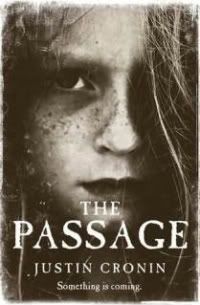
 I’m all about investment. Not the financial kind, despite the fact that The Passage is, at 766 pages, value for money, (*cough*and at the special price of $29.95 here*cough*) but character investment—where the people you’re reading about become important to you, their hopes and dreams something you are utterly involved in. And with this, the first in a now eagerly-anticipated trilogy, I was totally and utterly invested. I was trying to create extra hours in the day where I could read it: balancing it precariously on my knees while I was picking the sultanas out of my muesli, bringing easier lunches to work so I’d have less sandwich-building to do that ate into my reading time, and experiencing excitement instead of dread at the idea of catching public transport.
It’s a tale of journeys, starting with Professor Jonas Lear deep in Bolivia trying to find the rumoured cure for illnesses and old age. When he does, in a bloody and alarming fashion, it starts a new quest—one for people to act as guinea pigs to see if what was found with the horror in Bolivia can be turned into something viable for the human race. Brad Wolgast, devastated at the loss of his daughter and the separation from his wife, is a member of the FBI and sent out to recruit people, those with no hope for the future and no ties to the past: criminals on death row. When the virus works—but not as expected—they need someone younger, a child. When Wolgast is asked to collect a girl called Amy, abandoned by her mother at a nunnery, his conscience gets the better of him. But with the secluded government lab slowly losing control and the infected amassing power, he is running out of time.
Nearly a hundred years later, the world has become very small for one group of people. Peter Jaxon is waiting at the walls of his fortress home to kill the brother he loves, the brother who has been taken by the virals—the monsters the criminals became and turned others into. Virals will always come home, and so Peter waits for his brother, while the village he has lived in all his life starts to disintegrate as time and doubt get the better of them. Someone is certainly coming for Peter, but it is not his brother. For Peter, his journey is just beginning.
While vampires seem a little overdone now after so much media attention, this is an excellent representation of the horror genre. They are only vampires in a loose sense, as while they don’t particularly like sunlight, are strong and resilient and do like to consume people, they don’t sleep in coffins, you can’t have a dignified conversation with them and you can’t keep them out of your home simply by not giving them permission to come in. These monsters aren’t sparkling or cuddly—they are horrific creatures and managed to instil genuine thrills of terror into this cynical reviewer. The book is a nail-gnawing narrative of excitement as Wolgast evaluates his options and Peter discovers a world even more large and terrifying than the one he already knows.
Justin Cronin has rendered a simply amazing new world, from Wolgast’s near future (Where Dubya’s daughter Jenna Bush is, terrifyingly, governor of Texas) to Peter’s insular world, full of altered vernacular and a way of living that never leaves the four walls of the compound and is geared solely towards the inhabitants’ survival. The landscape is ravaged by the passing of time and toothy bad guys, and the world is utterly convincing.
I started The Passage apprehensive at the length, and finished it wailing with anger that it wasn’t three times the size. Not unlike Stephen King’s beautifully constructed epic stories like The Stand, I could have lost myself in Cronin’s written words forever. The characters are real and immediate, the story detailed and elaborate without being confusing, the language clear but not simplistic. I can barely wait for the sequels, and just to get more, I’m even open-minded about the Ridley Scott movie on the horizon. Run to get your copy of The Passage like there’s a convicted and infected felon on your tail. It’s simply that good.
Apologies for the delay in declaring the winner of the Hedgehog competition, but finally I am here to announce that Liadlaith is the winner of the two free tickets!
Liadlaith, please send your address to readwatchlisten (at) gmail (dot) com, and the tickets will zoom their way to you forthwith.
(Mama Duff, send me your address as well, as I might have something for you too...)
Hooray for free things!
 Dear Pixar,
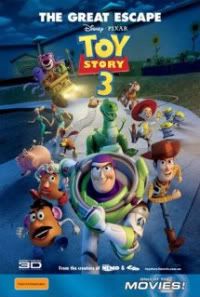
Aw, you guys, why are you always so gosh darn reliable? I knew Toy Story 3 was going to be good—everything you’ve done has been, bar Cars (but then perhaps I wasn’t the target market there). But I didn’t realise it was going to be quite so completely heart-wrenching, though after bawling through the entirety of Wall-E and for hours after Up, you’d think I’d learn. My mother reports that she took my nephews to see Toy Story 3 and the youngest crawled into her lap at the sad part—you know, the sad part—and said, “I want to go home.” Do you have a specific member of staff whose job it is exclusively to tug at heartstrings? Does he have an anatomical heart he tries it on? (*yank* “What if I killed off Carl’s wife before the first ten minutes were up? Oh, there we go, the tear ducts are working just fine!”)
It’s good you went back to Andy’s life. Now that he’s older, it’s clear the toys aren’t played with any more, but it’s nice to see them still hanging out and reminiscing about The Good Old Days. And with him off to college, it was interesting to see what he was going to do with his beloved Woody, Buzz, Jessie, Bullseye and friends, his name still etched onto their feet. When Andy’s mother accidentally sent his box of attic-bound toys to the day care centre, I knew we were in for some hijinks. But lordy, that Lots O Huggin Bear, the one who’s in charge of the toys at the centre, is one grim dude. And you’re marketing him as a giant plush huggable fun toy? He’s awful! Only the meanest of parents would give that to their children. Anyway. It was interesting how you made him out to be so wonderful and benevolent, only to have him turn on our pals and put them in an age-inappropriate room with kids who stick them up their noses and paint with Jessie’s head. What a rascal! Though I can’t deny it’s an awful lot like Toy Story 2, when Stinky Pete the Prospector came across as wise and all-knowing before turning into a giant bastard. Just sayin’. Also, Jessie’s voice is insufferable. Sorry.
But thanks, Unkrich, Lasseter and co., for a great watch. When Mr Potato Head sticks all of his features onto a piece of flatbread and flops about the screen attempting to save the day, I was almost hysterical with laughter. Buzz’s Spanish mode is something I wish all my talking toys had (and I hope the new release Buzz Lightyears will have a hip-twitching new feature.) I approve heartily of the cameo appearances from Barbie and Ken (who have never been so entertaining, even back when I was the one in charge of their comings and goings) to the plush, smiling Totoro. The drama at the end was absolutely nail-biting and I was openly weeping. Chris even held off speculating on how they were going to get out of this one until the last minute. (And then told me about it, what a surprise.) And I wasn’t sure if they were. We know you don’t hold back on the heartbreak. I can’t remember the last time I was that upset. Like reality isn’t awful enough at times, then you go putting poor innocent figurines in mortal fiery danger? You just have no shame, do you? Children everywhere will be having nightmares about Big Baby too with his creepy rotating head, lazy eye and ominous giggle.
Clever move, also, not pulling a Dreamworks and calling it Toy Story 3: The Final Chapter like they named the new Shrek. I like to think there’s going to be life in this franchise for all eternity. The idea that toys come to life when you’re not there—well, to this day, I still like to think that’s true. I mean, I know it’s not, because I’m a grownup with all my faculties, but it’s pretty adorable to think of. I imagine my three Wall-E figurines (four if you include the Pez dispenser) all rolling around filling their compactors with stray hair clips. (Which would explain where they all go.) Or my small robot collection saying, “Roger Roger” to each other and shooting lasers out of their eyes at my moneybox pig. Now, the people who saw the first two Toy Story movies in primary school or, like me, high school, are getting old enough to have their own children to take to see it, and in turn, they’ll take theirs. So how about it, dudes? Toy Story 4: The Devastation. Come on, I’d see it.
In conclusion, thanks a bunch. Keep up the good work. Love you!
Regards,
Fiona
P.S. “That’s Mr Evil Dr Porkchop to you!” Ha. Classic.
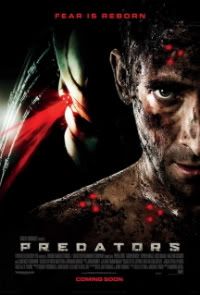
 The notion of a new Predator movie may inspire thrills in many, but the idea didn’t really fly with me straight away. I’ve seen the original Predator, which was good, and Aliens vs Predators, which was laughable, and that’s it. But then I heard that it was being made by Troublemaker Studios, which is owned by Robert Rodriguez and—well—that was it. I had to see it. Rodriguez is one of my heroes: a man who, with his talent for making solidly fun movies without budget blowouts, could probably have done Avatar for forty-six dollars and a six pack if James Cameron had bothered asking. So with the movie out yesterday but me at work, I barrelled towards the cinema for the first Friday showing, armed with popcorn and the stupid, adoring smile reserved only for Robert Rodriguez. And all he did was produce the thing.
It’s the story of eight people who are dropped from the sky with nothing but a parachute and the weapons they were last carrying. They’re all fighters—mercenaries, yakuza, soldiers, murderers—and despite being naturally wary, they band together to try and figure out what’s going on. It soon becomes clear that they are on another planet and that something is hunting them. Whatever could it be? Oh, yes, Predators, that’s right.
So does it hold up? Well, it’s a physical impossibility for Robbo to make a terrible film, so yes. If you wanted to go see a movie about humans fighting Predators, then you’ll find all you want in it. Surprise deaths, gore, explosions, the chasing of something that can be virtually invisible. The cast is solid, including the likes of Rodriguez regular Danny Trejo, surprise tough guy Adrien Brody, and serial creeper Walton Goggins. There are moments of tension and drama, and while the humans are generally a reprehensible lot of killers, you still feel for them and don’t really want them to die. (Shocking spoiler: not everyone survives.) Brody’s Royce takes charge, along with Israeli Defence Force sniper Isabelle (Alice Braga) who supports him and also does all those womanly things like have emotions and get nauseous at the sight of an eviscerated carcass. They need to find a way off the planet, and with the help of an unexpected cameo appearance (not from Arnie, keep your panties on), they may have a chance.
Predators is a good movie that does what it says on the box. It’s formulaic, but it’s not B-grade, or too corny (though there are a few clichéd lines thrown in there, like “Storm’s coming. Better get to shelter” and “I can’t do it alone!”) and it’s well-made. The Predators are big and enormously-mandibled, but for me—who didn’t see Predator as an impressionable teenager but as a cynical adult—they just look like oversized people and aren’t that scary to me. I like to be frightened, and this movie had some jumpy parts, but I couldn’t help finding the Predators faintly ridiculous. At one point, a monster rips out a human’s spine with skull still attached, a serious and awful moment that seemed so overdone that I burst into giggles.
For a studio known for pretty fun and dependable special effects, one explosion looked far too fluffy and fake, which was a great shame, and another visual flaw came in the scene where our heroes are able to see the sky properly for the first time and the shot of nearby planets looks lifted straight from a motivational poster. Some of our humans aren’t developed enough as characters for us to do anything but say “ew” when they die. There are a few other flaws—why are there Earth plants on a different planet? why do they comment that the sun doesn’t move but then suddenly they’re in night? why do the Predators occasionally stand up and dither before making the kill, leaving nearby shooters able to get their targets carefully positioned?—but on the whole, seeing as you’re already buying into a plot where aliens farm violent humans to indulge their hunting habits sans pickup truck, the problems aren’t that large. All in all, the movie remains a satisfying bust-up on a beautifully rendered planet, and while it’s a bit carnage-by-numbers, it’s still absolutely worth watching, even if just to see Adrien Brody a bit nude and covered in mud.
 Not a review for the time I got drunk on a trip to the Massachusetts capital and woke up the next morning hitched to a local, but for David Mamet’s play and my third Melbourne Theatre Company visit this year. With poetic repartee, Claire and Anna, together again after a long time apart, spar when their reunion doesn’t go quite as planned. Anna has found herself a “protector”, a man who is devoted to her and who can keep her (and Claire) in the manner to which she has become accustomed. Claire has also met someone new, but her disclosure—that of being in love with them—is much more devastating.
As the kind man trying to sell us programmes for the play explained to me, a “Boston Marriage” is a term coined around the nineteenth century and used to describe two females who live together. I am a sucker for a kindly salesman, so I can now tell you that the programme elaborated on that, explaining that the situation was often that the women were unmarriageable, or wanting to stay free of the constraints of education-ending marriage, or in love. The “Boston” aspect came from the fact that many universities opened up nearby at the time. Mamet’s play is set in the Boston itself in the late 1800s, in Anna’s luxuriously decorated townhouse, and populated by three women: Anna, Claire, and Anna’s maid, the slightly unhinged Catherine. The parts are performed by (respectively) Pamela Rabe (God of Carnage, reviewed here), Margaret Mills (many things I haven’t seen) and Sara Gleeson (Poor Boy, reviewed badly by me in a different, even more disjointed blog I refuse to link to).
As Mamet himself says, “[Mine is] a poetic language. It’s not an attempt to capture language as much as it is an attempt to create language.” Well, that’s all very well and good, but nothing screams “you’re watching a play” more than people having lengthy conversations without a single realistic moment in them. While Claire and Anna come up with wordy zingers every few seconds and the audience laughed, I couldn’t enjoy it. This is obviously personal preference; consensus from eavesdropping on the crowd as we picked our way outside was “oo-er, that was lovely” and “there’s been a few disappointments so far this year, but that was wonderful”. I would like to say that I could appreciate it as an art piece, but I just found it frustrating hearing them so ridiculously melodramatic and eloquent while steeped in grief, and the characters really all just came off as unlikeable. The accents felt wrong, but perhaps that’s just because the script meant I couldn’t disconnect from the fact I was seeing naturally Australian-accented actors in front of me speaking in American.
I did laugh at some of the jokes, and thought the costumes were absolutely divine. Some of their quirks as a couple played out nicely, as Anna tried desperately to remember the word she needs to use and clicks her fingers at Claire, who will respond. Chris and I do this all the time, often for unbelievably easy words, as portrayed in Boston Marriage by Anna: “Agricultural sites...” with Claire supplying “Farms.” However, I didn’t like this play. It felt far too forced, with plot contrivances that I saw coming and the use of swear words from otherwise innocent and articulate mouths to get a rise out of the crowd. (Oh my, the maid just said ‘fuck!’ How droll. And so on.) Seeing the rich swan about being rich can often be insufferable, and watching them being cutting towards the hired help is always guaranteed to make me angry. Perhaps I was a timid Scottish maid in a past life, because Anna’s scathing attitude towards Catherine garnered much mirth from the crowd and a stony-faced glare from me. The ye olde speak of the late nineteenth century can also be hard to keep up with—happily, a bashful MTC staff member agreed with me on this—and by the end I was just plain bored with their yammering. Did they love or hate each other? More importantly: did I like them enough to care? I didn’t, and by the end I was just waiting for it to end so I could go out for the fancy dinner we’d planned afterwards. In conclusion: the play didn’t come through with the goods, but Red Emperor’s dumplings sure did.

 I am a terrible cook. It’s okay, I’ve come to terms with it. I make the best toast, a mean avocado and tomato sandwich, and can put a teabag in a mug of hot water like I’ve been doing it all my life. But I’ve never made a good cake or fantastic cupcakes, or enraptured dinner guests with a meal. In short, I am no threat to your plan of winning Masterchef.